
Quick answer
- Plant garlic in most of West Virginia from mid-October through mid-November, after the first frost has come but before the ground freezes solid.
- In the high mountain counties (zone 5b to 6a), move that earlier, roughly late September into mid-October.
- In the warmer Eastern Panhandle and Ohio Valley (zone 6b to 7a), you can plant into late November.
- You want the cloves to grow roots before winter but no tall green tops.
- Hardneck garlic handles WV winters better than softneck, and you harvest the following July.
What this covers
- When is the best time to plant garlic in West Virginia?
- How does your elevation change garlic planting time?
- How do you know the ground is ready?
- Should you plant hardneck or softneck garlic in WV?
- How do you plant garlic cloves?
- When should you plant the rest of a fall garden in WV?
- When do you harvest fall-planted garlic?
- Frequently asked questions
Plant garlic in most of West Virginia from mid-October through mid-November. You want it in the ground after the first hard frost but a few weeks before the soil freezes solid, so the cloves grow roots without pushing up green tops that winter would kill.
Colder, higher-elevation counties plant earlier, and the warmer valleys can wait later. Below I break it down by where you live, how to read the ground, and how to get the cloves in right. Updated July 15, 2026.
When is the best time to plant garlic in West Virginia?
The best window for most of the state is mid-October to mid-November. Garlic is a fall crop that overwinters in the ground, so timing is about letting the roots establish before the freeze and keeping the tops from sprouting too early.
Think of it this way. Plant three to six weeks before your ground normally freezes hard for the season.
Get it in too early and warm October soil can coax up green shoots that get burned back by December cold. Get it in too late and the cloves go into frozen ground with no time to root, which weakens the plant come spring.
How does your elevation change garlic planting time?
Elevation shifts your planting date more than almost anything else in West Virginia. Our mountains and valleys sit in different growing zones, and garlic timing follows the frost, not the calendar.
The high country, places like Tucker, Randolph, Pocahontas, and Preston counties, runs zone 5b to 6a. Those gardeners plant earlier, roughly late September through mid-October, because the ground freezes sooner up there.
The Eastern Panhandle and the Ohio River valley run warmer, zone 6b into 7a. Down there you can plant late October and right into late November most years. If you garden somewhere in the middle, aim for that mid-October to mid-November sweet spot and watch your local weather.
How do you know the ground is ready?
The ground is ready when your first fall frost has come and gone and the soil has cooled but is still workable. A soil temperature around 50 degrees at planting depth is close to ideal, and you do not need a thermometer to get it right.
A simpler read: plant once nighttime temperatures are consistently dipping into the 30s and 40s, and the summer garden is winding down. The soil should still crumble and dig easily, not be locked up hard.
Loosen and weed the bed before you plant, since fighting weeds around emerging garlic in spring is a pain. A stand-up heavy-duty weed puller makes that fall cleanup a lot easier on your back.
Should you plant hardneck or softneck garlic in WV?
Plant hardneck garlic in West Virginia. Hardneck varieties are built for cold winters and a real freeze, which is exactly what most of the state hands them, and they reward you with a garlic scape in early summer.
Softneck garlic, the kind you usually see in grocery stores, does better in mild-winter regions and can be hit or miss in our colder counties. It does store longer and braids nicely, so some Panhandle gardeners grow a little of both.
Buy seed garlic from a garden supplier or a local grower rather than planting grocery-store bulbs. Grocery garlic is often a warm-climate softneck and can be treated to resist sprouting, which is the opposite of what you want.
How do you plant garlic cloves?
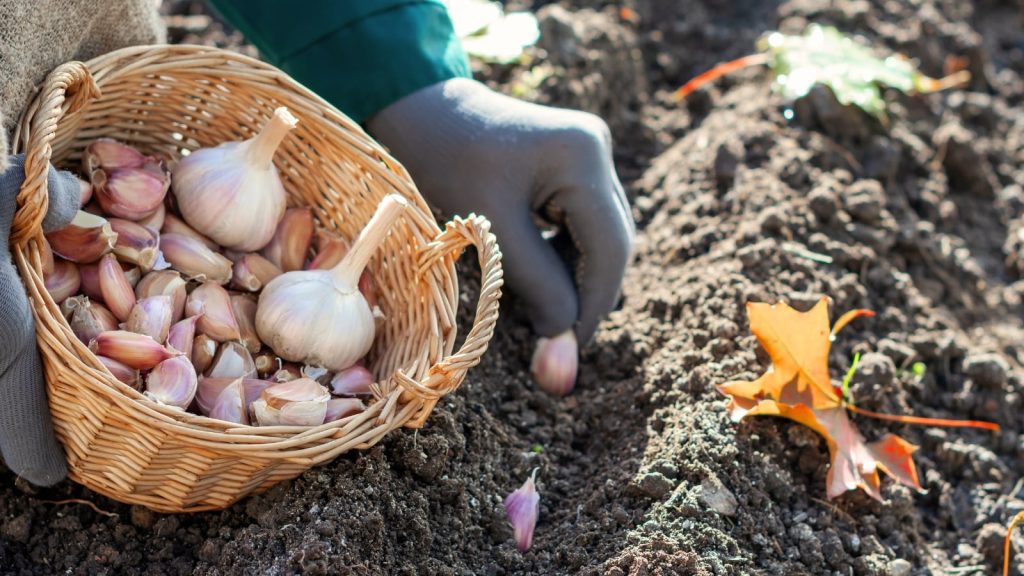
Break the bulb into individual cloves right before planting, and set each one pointy end up about two inches deep and six inches apart. Keep the papery skin on each clove and do not plant the tiny inner cloves, since bigger cloves make bigger bulbs.
Plant into loose, well-drained soil that got some compost worked in. Garlic hates sitting in soggy ground over winter, so a raised bed or a spot that drains well pays off.
After planting, mulch the bed with three to four inches of straw or shredded leaves. The mulch keeps the soil temperature steady through freeze-and-thaw cycles, which is what actually heaves cloves out of the ground on a WV hillside. A good garden tool set that holds up and a solid pair of pruning shears for sore hands make quick work of the planting and the spring scape trimming.
When should you plant the rest of a fall garden in WV?
Most fall garden crops in West Virginia go in from late July through early September, well before garlic. Cool-season vegetables need to size up before frost, so they are planted much earlier than the garlic that overwinters.
Sow fall carrots, beets, kale, and turnips in late July and August. Lettuce, spinach, and radishes can go in through early to mid-September in most of the state, later in the warmer valleys.
Garlic is the odd one out. It goes in last, in the fall, and comes out first thing the next summer, so it does not compete with the rest of the fall bed for space. If you are already planning next season’s beds, our seasonal gear and garden guides cover the tools and timing side by side.
When do you harvest fall-planted garlic?
Harvest fall-planted garlic the following summer, usually in July for most of West Virginia. The plant tells you when: dig once the lower third to half of the leaves have turned brown but the upper leaves are still green.
Each green leaf is a wrapper layer around the bulb, so you want several still green to protect the garlic in storage. If you wait until every leaf is dead, the bulbs can split and store poorly.
On hardneck varieties, cut the curling scapes in June once they loop, which pushes more energy into the bulb. Cure the harvested bulbs in a dry, shaded, airy spot for a couple of weeks before you trim and store them. A shady porch strung with waterproof solar string lights makes a fine curing spot on a warm July evening.
Frequently asked questions
Can you plant garlic in spring in West Virginia?
You can, but fall planting gives far better bulbs. Spring-planted garlic misses the cold period that triggers big bulb formation, so it usually produces small heads or just a single round. If you missed the fall window, plant as early as the ground can be worked in spring and expect a smaller harvest.
How deep should garlic be planted in WV?
Plant cloves about two inches deep, pointy end up, and space them roughly six inches apart. In colder mountain counties, going a touch deeper and mulching heavily helps protect against frost heave. Drainage matters more than exact depth, so avoid low spots that stay wet.
Do you need to soak garlic before planting?
Soaking is optional. Some growers soak cloves for a few hours in water with a little baking soda or fish fertilizer to reduce disease and give a head start, but plenty of good WV garlic goes straight into the ground dry. If your soil is dry at planting, water the bed in after.
Will garlic survive a West Virginia winter without mulch?
It often does, but mulch is cheap insurance and I would use it. The bigger risk here is not cold itself but freeze-and-thaw cycles heaving cloves out of the soil, and three to four inches of straw or shredded leaves keeps the ground temperature steady. Mulch also slows spring weeds.
Getting your garlic in the ground
The whole trick with West Virginia garlic is patience in October. Wait for that first real frost, get the cloves in before the ground locks up, mulch it well, and then leave it alone until next summer.
Mark your calendar now while you are thinking about it, because the right window for planting a fall garden here slips by fast once deer season and firewood cutting take over the fall. Come July, digging up fat heads of your own garlic is worth the ten minutes of planting you did nine months earlier.
