
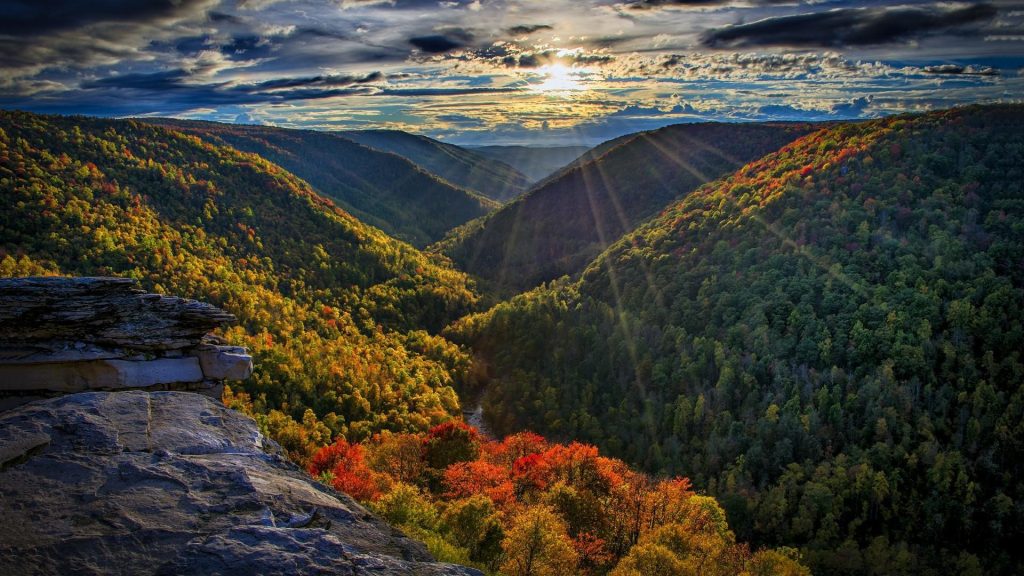
Key takeaways
- Elevation decides everything. The high country above roughly 3,500 feet (Dolly Sods, Canaan Valley, Spruce Knob, the Highland Scenic Highway) usually peaks from late September through the first two weeks of October.
- Mid elevations like the New River Gorge and Babcock generally peak mid to late October, and the low river valleys hold color into the first week of November.
- If you can only pick one window, the middle two weeks of October give you something worth seeing almost anywhere in the state.
- Best single stops: Bear Rocks at Dolly Sods, Lindy Point at Blackwater Falls, the Highland Scenic Highway overlooks, Grandview and Long Point in the New River Gorge, and Coopers Rock outside Morgantown.
- Book lodging in Davis, Canaan, and Fayetteville early. October weekends fill months ahead, and Bridge Day traffic on US 19 is its own event.
Updated July 13, 2026.
What’s in this guide
- When do fall colors peak in West Virginia?
- Where are the best places to see fall colors in West Virginia?
- What is the best fall foliage drive in West Virginia?
- Is the New River Gorge worth visiting in October?
- Where should you go if you only have one day?
- Why are some fall color years better than others?
- How do you avoid the crowds?
- What should you bring on a fall color trip?
- Frequently asked questions
The short answer: go high early and low late. West Virginia climbs from about 600 feet along the Ohio River to 4,863 feet at Spruce Knob, and color rolls downhill from the top over about a month. The Potomac Highlands and the Highland Scenic Highway turn first, the New River Gorge follows, and the valleys finish the job in late October and early November.
Plan your trip around that gradient instead of a single date and you will hit color no matter which weekend you get off work. Below is where to stand, when to be there, and what to do when the weather does not cooperate.
When do fall colors peak in West Virginia?
Peak runs from roughly the last week of September in the highest spruce and heath country to the first week of November in the lowest river bottoms. There is no one peak weekend for the whole state, which is why national foliage maps are close to useless here.
A rough working rule: color drops in elevation as October goes on. The 4,000-foot ridges are usually done by the time the New River Gorge is at its best, and the gorge rim colors up a week or so before the water level of the river.
Trees matter too. Black gum and sumac go red early, tulip poplar yellows and drops fast, sugar and red maple carry the brightest reds and oranges through the middle, and oaks and hickories hold on late with russet and gold. In the highlands, red spruce stays dark green all winter, which is exactly what makes the orange and crimson pop up there.
West Virginia Tourism posts a foliage map that updates weekly through the season. Check it a few days before you drive, because a wet, windy front can end peak in a single afternoon.
Where are the best places to see fall colors in West Virginia?
The reliable ones, in the order they turn: the Potomac Highlands, the Highland Scenic Highway, the New River Gorge, northern West Virginia around Morgantown, and the Greenbrier Valley. Pick a region by the date you can travel, not the other way around.
Potomac Highlands and Canaan Valley (early October)
Dolly Sods is the one people drive across three states for. The Bear Rocks end gives you wind-flagged spruce, open heath, and blueberry bushes that turn deep red under an enormous sky. The forest roads in are rough gravel, slow, and hard on a low car, so leave extra time.
Blackwater Falls State Park is the easy companion trip. Lindy Point at sunset over the Blackwater Canyon is the postcard, and Pendleton Point takes a couple minutes to reach from the car. Canaan Valley next door gives you a wide basin of color with the ridges standing over it.
Spruce Knob has an observation tower with a full circle view from the highest point in the state, and Seneca Rocks sits a short drive north. Farther south, the Cass Scenic Railroad hauls you by steam up to Bald Knob, which is about as close as you get to a chairlift ride through the treetops in West Virginia.
Highland Scenic Highway (early to mid October)
WV Route 150 runs the high spine of Pocahontas County with a handful of pull-off overlooks and no gas, no food, and thin cell service. It is one of the highest stretches of road in the state and it turns early. Fill the tank in Marlinton or Richwood first.
Add the Cranberry Glades boardwalk for the bog and the Falls of Hills Creek for a short, steep walk down to three waterfalls. Both are minutes off the highway.
New River Gorge (mid to late October)
Grandview has the long, curling view of the river and takes almost no walking. Long Point Trail is the classic photo of the New River Gorge Bridge framed by color, about three miles round trip on easy ground. Endless Wall gives you rim views and a swinging footbridge over a creek.
Babcock State Park is nearby, and the Glade Creek Grist Mill is probably the most photographed building in West Virginia in October for good reason. Hawks Nest State Park overlooks the gorge from the US 60 side and takes five minutes to see.
Northern West Virginia (mid to late October)
Coopers Rock State Forest sits fifteen minutes from Morgantown and hangs over the Cheat River Gorge. It is the best color-to-effort ratio in the state, which is why it is packed on WVU home game weekends. Get there early or come on a Tuesday.
Greenbrier Valley and the south (late October)
The Greenbrier River Trail is flat, long, and quiet, which makes it the rare foliage trip you can do on a bike with kids. Droop Mountain Battlefield has a tower with a view across the valley. Pipestem’s tram drops into the Bluestone Gorge if you would rather ride than walk.
What is the best fall foliage drive in West Virginia?
For early October, the Highland Scenic Highway. For late October, US 60, the Midland Trail, through the Kanawha and New River country. Those two cover most of the season between them.
If you want to string a longer loop together, US 219 from Elkins south through Marlinton and Lewisburg gives you ridge after ridge with real towns in between. The Coal Heritage Trail through the southern counties is quieter, older, and worth doing once, though the color there runs later than most people expect.
One thing about mountain driving in October: leaves on wet pavement are slick, deer are moving hard at dawn and dusk, and every curve in West Virginia hides another curve. Add an hour to whatever your map app tells you.
Is the New River Gorge worth visiting in October?
Yes, and October is arguably the best month to be there. The rim colors up mid to late month, the humidity is gone, and the rafting outfitters are still running releases on the Gauley into mid October.
The catch is Bridge Day, usually the third Saturday in October, when the bridge closes to traffic and tens of thousands of people show up to watch BASE jumpers. It is a genuine spectacle and a genuine traffic problem. If you want a quiet hike on the rim, pick a different weekend and check the official schedule before you book anything.
For a low-effort day: Canyon Rim Visitor Center, then Long Point, then Grandview in the afternoon when the light is on the far wall. That is a full day without a hard mile in it.
Where should you go if you only have one day?
Early October, go to Dolly Sods and finish at Lindy Point for sunset. Late October, go to Coopers Rock if you are north or the New River Gorge rim if you are south. Those give you the most color for the least driving.
The mistake people make with one day is trying to link two regions. Dolly Sods to the New River Gorge is a long drive on slow roads, and you will spend the good light in the car. Pick a region, pick two or three stops inside it, and let the rest go.
Why are some fall color years better than others?
The best color comes from a stretch of warm sunny days followed by cool nights that stay above freezing. Sugar in the leaves gets trapped overnight, which is what fuels the reds. Cloudy, warm, rainy Octobers give you muddy yellows and brown.
A dry summer stresses trees into dropping leaves early, so a drought year usually means an earlier, shorter, duller show. A hard early freeze at elevation can kill the leaves outright and skip the color entirely up top.
You cannot control any of it, so the practical move is flexibility. Watch the weekly foliage map, watch the forecast for wind and rain, and be willing to move your trip a week in either direction. A big front with 30-mile-an-hour gusts will strip a ridge bare in a day.
How do you avoid the crowds?
Go on a weekday, and if you have to go on a weekend, be parked at the trailhead by 8 or 9 in the morning. The popular overlooks fill by late morning in October and the small gravel lots at places like Lindy Point and Long Point are not big.
Lodging is the bigger squeeze. Davis, Thomas, Canaan Valley, and Fayetteville book out months in advance for October weekends, and Morgantown hotels disappear on WVU home game weekends. If you are reading this in July, you are early enough to get what you want.
Also worth knowing: fall hunting seasons overlap with peak color on national forest and wildlife management land. Archery is underway in October and firearms seasons follow. Check the current WV DNR regulations for dates and blaze orange requirements before you hike public land, and keep the dog leashed and visible.
What should you bring on a fall color trip?
Layers, rain gear, real footwear, and a light. The high country can sit in the 30s at dawn and hit the 60s by afternoon, and the ridges are windier and 10 to 15 degrees colder than the valley you drove up from.
Rain is a fact of October in the mountains, and it usually arrives sideways at Bear Rocks. A packable shell you will actually carry beats a heavy coat you leave in the truck, and our roundup of lightweight rain jackets and waders covers the kind that stuffs into a daypack.
For footwear, the trails at Dolly Sods and along the gorge rim are rocky, rooty, and often wet. Ankle support and grip matter more than waterproofing, though both help. If your boots have never fit right, start with boots cut for wide feet and a pair of merino wool hiking socks that stay warm when they get damp.
Sunset comes early. By mid October it is dark not long after 7, and by the end of the month it is closer to 6:30. If you are chasing golden hour at an overlook, you are hiking out in the dark, so carry a light. A headlamp with a red mode keeps you from blinding everyone else at the overlook while you pack up.
Binoculars are the underrated item. Fall is hawk migration season along the Allegheny Front, and Dolly Sods and Hanging Rock in Monroe County put you right under the flight line on a good north wind. Glass also lets you pick apart the far wall of a gorge and see which slopes have turned and which have not.
Barska Floatmaster 7×50 Binoculars

A 7×50 pair like this Barska is the right shape for ridgetop viewing: wide field, bright in the flat light of an overcast October morning, and steady enough to hold without a tripod. The waterproof housing matters more than you think when the weather turns on you at 4,000 feet. It floats, too, which is handy if you take it out on Summersville Lake or the Greenbrier on the same trip.
- 7×50 wide field, bright in flat overcast light
- Waterproof and floats
- Steady enough to hand-hold at an overlook
Round it out with water, snacks, a paper map or offline map, and a full tank of gas. Cell service on the Highland Scenic Highway and in the Dolly Sods road network ranges from bad to nonexistent. If you are still building out your gear closet before the season, our deals page is where the outdoor stuff lands.
Frequently asked questions
What is the best time to see fall colors in West Virginia?
Mid October is the safest single bet statewide, but the real answer depends on elevation. High country like Dolly Sods, Canaan Valley, and the Highland Scenic Highway usually peaks from late September through the first two weeks of October. The New River Gorge and mid-elevation areas peak mid to late October, and the low river valleys hold color into early November.
Where is the single best place to see fall foliage in West Virginia?
For early October, Dolly Sods and the Bear Rocks area, with Lindy Point at Blackwater Falls for sunset. For mid to late October, the New River Gorge rim at Long Point or Grandview. Coopers Rock near Morgantown gives you the biggest view for the least walking if you are short on time.
Do you need to hike to see good fall color in West Virginia?
No. Grandview, Hawks Nest, Coopers Rock, Pendleton Point, and the Highland Scenic Highway overlooks are all short walks from a parking lot. The longer trails give you more solitude and better angles, but the drive-up views in West Virginia are genuinely good.
Is Dolly Sods hard to get to?
The roads in are gravel, rough, and slow, and they will beat up a low-clearance car. Most passenger vehicles make it if you take your time, but plan on the drive taking far longer than the mileage suggests. Cell service is essentially zero, so download your maps before you leave pavement.
Does Bridge Day affect fall foliage trips to the New River Gorge?
Yes. Bridge Day, usually the third Saturday in October, closes the bridge to traffic and brings enormous crowds to Fayette County. If you want a quiet foliage hike, avoid that weekend, and if you want the spectacle, book lodging months ahead and check the official schedule for road closures.
Fall color in West Virginia is not a date on the calendar, it is a wave moving downhill for about five weeks. Once you think of it that way, planning gets easy: high and early, low and late, and let the weekly foliage map settle the rest.
Book your room now if you want Davis or Fayetteville in October, or point the drive south toward elk country in the southern coalfields. Then keep an eye on the forecast, pack a rain shell, and be ready to move your weekend by seven days if a wind event is coming. The people who see the best color every year are the ones who stay flexible.
