
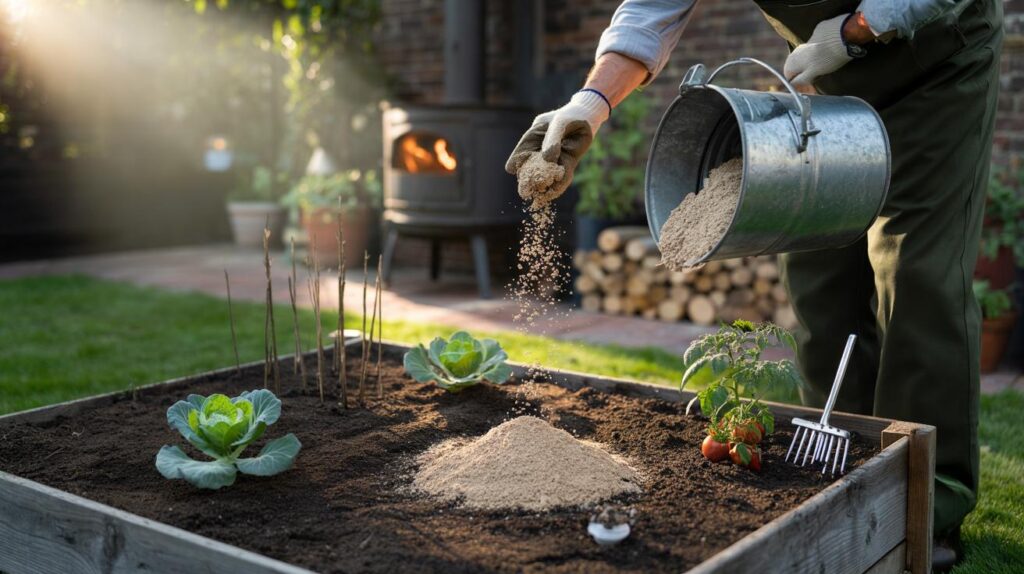
The short answer
- Yes, you can put wood ash on your garden, but treat it like lime, not like fertilizer you can pile on.
- Wood ash raises soil pH and adds potassium and calcium. It adds no nitrogen.
- Get a soil test first. Most West Virginia soil runs acidic, which is why ash often helps here, but too much can push pH past where vegetables like it.
- Keep it away from blueberries, potatoes, azaleas, and rhododendrons.
- Only use ash from clean, untreated wood. No painted lumber, pressure-treated scraps, or charcoal briquettes.
Updated early November. Black Friday is coming and early holiday shopping is starting, but the stove is already making ash, so here’s what to do with it.
In this post
- Is wood ash good for garden soil?
- Why does West Virginia soil change the answer?
- How much wood ash can you put on a garden?
- When and how should you spread it?
- Which plants should never get wood ash?
- What kind of ash should stay out of the garden?
- Can you put wood ash in the compost pile?
- Storing ash until spring
- Frequently asked questions
Yes, you can put wood ash on your garden, and in most of West Virginia it does some good. The catch is that ash works like a fast-acting lime, so a little helps acidic soil and a lot can throw your pH out of whack for years.
If you heat with wood, you’re going to have a bucket of the stuff every few days from now until April. A thin layer on the garden is one of the better places for it, as long as you know your soil first.
Is wood ash good for garden soil?
Wood ash is good for acidic garden soil because it raises pH and supplies potassium and calcium. It does nothing for soil that’s already neutral or alkaline, and it can hurt it.
Most of what’s left after a fire is calcium compounds, with a smaller share of potassium and trace amounts of phosphorus, magnesium, and other minerals. The nitrogen burned off in the stove, so ash will never replace a regular fertilizer.
The liming effect is the main thing to understand. Ash has roughly half the neutralizing power of ground agricultural limestone, but it dissolves much faster, so it changes your soil quicker and gives you less room for mistakes.
Why does West Virginia soil change the answer?
West Virginia soil tends to be acidic, so wood ash is more likely to help here than in places with naturally sweet soil. Our mountain soils formed over sandstone and shale under hardwood forest, and decades of rain keep leaching the calcium out.
Plenty of national articles warn people off wood ash because their readers garden on alkaline ground out West. That advice doesn’t fit a hollow garden in Randolph County, where the soil test often comes back in the low 5s.
Still, “tends to be” isn’t a soil test. A garden that’s been limed every spring by a previous owner can already be sitting at 7, and adding ash on top of that is a mistake you’ll be fixing for a long time.
Your county WVU Extension office can tell you how to send a soil sample in. The report gives you pH and a lime recommendation, and that number is what tells you whether ash belongs in your garden at all.
How much wood ash can you put on a garden?
A common extension guideline is no more than about 15 to 20 pounds of wood ash per 1,000 square feet per year, and only when a soil test shows your pH needs raising. For a typical backyard garden, that’s a light gray dusting, not a visible layer.
Most vegetables do best between about 6.0 and 7.0. If your test comes back in that range, you can skip the ash entirely or use just enough to replace the potassium your crops pull out.
Retest every couple of years if you use ash regularly. It’s easy to keep adding a little each winter out of habit and slowly push the soil past neutral, where plants start having trouble taking up iron, manganese, and phosphorus.
When and how should you spread it?
Late fall and winter are the best times to spread wood ash, on bare beds after the harvest is done. Once you’re past the first frost and the tomato vines are pulled, the beds are open and winter rain has months to carry the ash into the soil.
Pick a calm, dry day. Scatter the ash thinly by hand or with a small scoop, then rake or till it into the top few inches so it doesn’t just wash off the surface.
Wear gloves and safety glasses, and a dust mask isn’t a bad idea. Fresh ash turns caustic when it gets wet, close to lye, and it will dry out and crack your hands or sting badly if it blows in your eyes.
Don’t dump ash right on top of seedlings or against plant stems. The same caustic quality that bothers your skin can burn tender roots and leaves.
November beds are usually muddy, and walking through them in sneakers gets old fast. A pair of muck boots for the whole family makes garden cleanup a lot less miserable this time of year.
Which plants should never get wood ash?
Keep wood ash away from blueberries, potatoes, azaleas, rhododendrons, and mountain laurel. All of them want acidic soil, and raising the pH works against them.
Blueberries are the big one in West Virginia home gardens. They need a pH somewhere around 4.5 to 5.5, and a few seasons of ash nearby can leave them yellow and stunted.
Potatoes are a different problem. They’ll grow fine in sweeter soil, but higher pH encourages potato scab, which leaves rough corky patches on the skins, so keep the potato patch ash-free.
Crops that tend to appreciate a little ash on acidic ground include beans, peas, garlic, onions, cabbage family crops, and most fruiting plants like tomatoes. That’s still assuming your soil test says the pH is low.
What kind of ash should stay out of the garden?
Only use ash from clean, untreated firewood. Anything else can carry metals or chemicals you don’t want in soil that grows food.
That rules out ash from painted or stained lumber, pressure-treated wood, plywood, particleboard, and pallets with unknown history. Charcoal briquettes and lighter fluid ash stay out too, along with anything from burning trash, cardboard with glossy print, or coal.
Hardwood ash from oak, hickory, maple, and ash trees has more nutrients than softwood ash, but either works fine. The wood itself matters far less than whether it was clean.
Can you put wood ash in the compost pile?
You can add small amounts of wood ash to compost, sprinkled thin between layers. Heavy amounts raise the pile’s pH and slow down the microbes that break things down.
A light dusting works well on a pile heavy with oak leaves, which run acidic. If you raked up a mountain of leaves after the color came and went this fall, a scoop of ash every so often is a decent pairing.
Keep ash and fresh manure apart, and don’t spread ash at the same time as urea or ammonium-based fertilizers. The high pH turns some of that nitrogen into ammonia gas, and it drifts off instead of feeding your plants.
Storing ash until spring
Store wood ash in a metal can with a tight metal lid, set on dirt or concrete away from the house. Coals buried in ash can stay hot for days, and every winter somebody in this state loses a porch or a garage to a cardboard box or plastic bucket of “cold” ash.
Keep the lid on once it cools, too. Rain leaches out the potassium, and a wet can of ash turns into a heavy gray paste that’s no fun to spread.
If you end up with far more than your garden needs, which most full-time wood burners do, it can go on a gravel driveway for traction on ice or out to the edge of the woods in thin scatters. Just don’t pile it all in one spot.
Frequently asked questions
Can you put too much wood ash on your garden?
Yes. Too much wood ash raises soil pH past neutral, and at that point plants struggle to take up iron, manganese, and phosphorus. High pH is slow and hard to bring back down, so stick to a light dusting and retest your soil every couple of years.
Can you put wood ash on your lawn?
You can, under the same rule as the garden: only if a soil test shows acidic soil. Spread it thinly in late fall or winter and water it in or let rain do it. Lawns in much of West Virginia get limed for the same reason, so ash can stand in for part of that.
Does wood ash keep slugs away?
A ring of dry ash around a plant will discourage slugs for a little while. Once it gets wet, it stops working and starts raising the pH right at the plant’s base. It’s not worth relying on.
Is fireplace ash the same as wood stove ash?
If both burn clean, untreated firewood, the ash is basically the same. Fireplace ash sometimes has more unburned charcoal chunks, which are harmless in the garden. Leave out any ash from fire starters, wrapping paper, or manufactured logs.
Getting the ash where it belongs
Get your soil tested this winter, keep the ash in a metal can until the beds are bare, and spread it thin. That’s really all there is to it, and it beats hauling bucket after bucket to the woods line.
Ash duty on a cold morning goes better in a warm layer, and a good flannel shirt jacket is about right for it. If you’re starting holiday shopping early, you can also browse the current deals before Black Friday gets here.
