
The short answer
- Plant garlic in West Virginia from mid-October through mid-November, a few weeks after your first hard frost and before the ground freezes.
- In the high country, like Pocahontas, Tucker, and Randolph counties, aim for early to mid-October. In the lower river valleys and the Eastern Panhandle, you can plant into late November.
- The soil is ready when it stays below about 50 degrees at a depth of 4 inches.
- Hardneck garlic handles our winters better than softneck.
- Fall-planted garlic is ready to harvest from late June into July.
Updated November 9, 2026. Black Friday is coming, and early holiday shopping is starting, but the garden still has one job left.
The best time to plant garlic in West Virginia is mid-October through mid-November, a few weeks after the first hard frost and before the ground freezes. If you’re reading this in early November, you’re on time for most of the state.
The exact week depends on how high up you live. A garden at 3,500 feet near Snowshoe and a garden along the Ohio River are on different schedules, so I’ll break that down below.
In this guide
- What month should you plant garlic in West Virginia?
- Does elevation change the planting date?
- How do you know the soil is ready?
- Is it too late to plant garlic in November?
- Which garlic grows best in West Virginia?
- How deep and how far apart should you plant cloves?
- Should you mulch garlic over a WV winter?
- When will fall-planted garlic be ready?
- Frequently asked questions
What month should you plant garlic in West Virginia?
October and November are the garlic months here, and the sweet spot for most gardens is late October to early November. That timing gives the cloves enough time to grow roots before the ground freezes. It does not give them time to push up much leaf growth that winter will burn back.
Garlic needs a long cold spell to divide into a proper bulb. Plant it in spring and you often get one round, onion-like bulb with no cloves. That cold requirement is the reason fall planting is standard across the state.
A simple rule works for most people. Wait until after your first killing frost, then plant within the next three to five weeks.
Does elevation change the planting date?
Yes, and in West Virginia it changes the date more than latitude does. The higher you garden, the earlier you should plant, because your ground freezes sooner.
Here’s how I’d split it:
- High mountains (roughly 2,500 feet and up, including Canaan Valley, Pocahontas County, and the upper Greenbrier): early to mid-October.
- Middle elevations, which covers much of the state: mid-October to mid-November.
- Low river valleys and the Eastern Panhandle (the Kanawha and Ohio valleys, Huntington, Parkersburg, Martinsburg): late October through late November.
If you’re not sure how early winter shows up where you live, look at when snow usually starts in your part of West Virginia. The places that get early snow also get frozen ground early. For a local first-frost estimate, your county WVU Extension office is the best source.
How do you know the soil is ready?
The soil is ready when it stays below about 50 degrees at a depth of 4 inches. A cheap soil thermometer settles the question in a few seconds, and you should check it in the morning.
If you don’t have a thermometer, use the trees. Once most of the leaves are down and you’ve had a frost or two, the soil has usually cooled enough.
Garlic follows almost the same schedule as spring bulbs. If you’ve already worked through the right time to plant tulip bulbs here, plant your garlic the same weekend.
Is it too late to plant garlic in November?
No. If you can still push a trowel into the ground, you can still plant garlic in most of West Virginia. Gardeners in the lower valleys often plant until Thanksgiving with no trouble.
Late cloves grow fewer roots before winter, so give them a thick layer of mulch. If the ground has frozen solid, store the cloves somewhere cool and dry. Then plant them as early in spring as the soil can be worked, and expect smaller bulbs.
November weekends fill up fast here. Get the garlic in before rifle buck season opens the week of Thanksgiving. If you do get a deer, you’ll have other things on your mind, starting with how long you have to check it in.
Which garlic grows best in West Virginia?
Hardneck garlic is the better choice for most of West Virginia. It is bred for cold winters, it sends up edible scapes in June, and it usually has bigger, easier-to-peel cloves.
Music and German Extra Hardy are dependable hardnecks that handle mountain winters. Chesnok Red is another common choice if you like garlic for roasting.
Softneck garlic stores longer and does fine in the warmest low spots. It’s a gamble at higher elevations. Buy seed garlic from a grower or a farmers market vendor rather than the grocery store, because store garlic is often a softneck grown far south of here.
How deep and how far apart should you plant cloves?
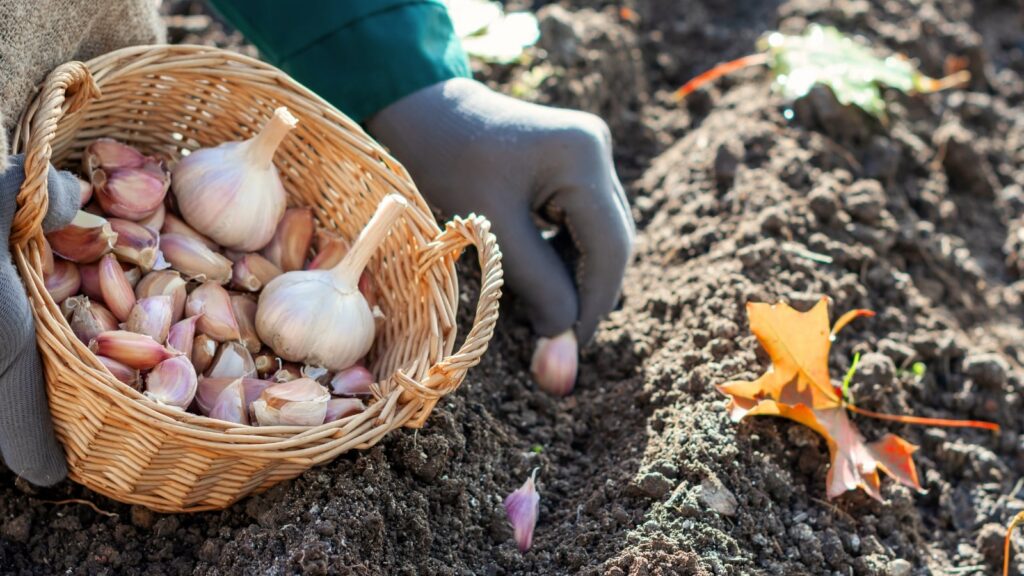
Plant each clove about 2 inches deep, pointed end up, and 4 to 6 inches apart. Leave 10 to 12 inches between rows, or plant in a grid in a raised bed.
Break the bulbs apart the day you plant, not a week ahead, and leave the papery skin on each clove. Save the biggest cloves for planting. Big cloves grow big bulbs, and you can cook the small ones.
Drainage matters more than most people think. A lot of West Virginia ground is heavy clay that stays wet all winter, and garlic rots in standing water, so a raised bed or a mounded row helps.
Garlic likes soil with a pH between 6.0 and 7.0. If you’re tempted to spread stove ash on the bed, test the soil first and read up on whether wood ash belongs in your garden. Ash raises pH, and a lot of WV soil is already near the top of that range after years of liming.
Should you mulch garlic over a WV winter?
Yes. Cover the bed with 4 to 6 inches of straw or shredded leaves once the ground has cooled. Mulch keeps the soil from freezing and thawing over and over, which can push cloves up out of the ground.
Use straw, not hay. Hay is full of seeds, and you’ll spend May pulling grass out of your garlic.
Rake the mulch back a bit in early spring so the soil warms up. Leave some in place to hold moisture and keep weeds down.
When will fall-planted garlic be ready?
Fall-planted garlic is ready to harvest in West Virginia from late June into mid-July. The signal is the leaves. When the bottom third to half of them have turned brown, dig a test bulb.
Hardneck plants send up curly scapes in June. Cut them off once they curl so the plant puts its energy into the bulb, and then fry them or blend them into pesto.
After you dig the bulbs, cure them for two to three weeks in a shady spot with good airflow, like a porch or a barn. Then trim them and store them somewhere cool and dry.
Frequently asked questions
Can you plant garlic in the spring in West Virginia?
You can, but the bulbs will be smaller and sometimes won’t split into cloves. Garlic needs several weeks of cold to form a proper bulb. If you plant in spring, plant as early as you can work the soil.
Can I plant garlic from the grocery store?
It sometimes works, but it’s a poor bet. Store garlic is usually a softneck type grown in a warm climate, and some of it is treated to slow sprouting. Seed garlic from a grower or a farmers market grows better in West Virginia.
What if my garlic sends up green shoots before winter?
A few inches of green in fall is normal and won’t hurt the plant. The leaf tips may burn back in a hard freeze, and the plant will regrow in spring. Add mulch around the shoots and leave them alone.
Should I fertilize garlic when I plant it?
Work some compost into the bed before you plant. Garlic uses most of its nitrogen in spring, so feed it when the shoots start growing again in March or April. Stop feeding by late May so the plant can put its energy into the bulb.
Get the cloves in this weekend
If your ground isn’t frozen, you have time. Pick a dry afternoon, plant your biggest cloves 2 inches deep, and cover the bed with straw before the cold settles in.
Garlic is about the easiest crop to grow here, because winter does most of the work for you. If you’re starting your holiday list for the gardeners in your family, browse the current deals page while you wait for July.
