
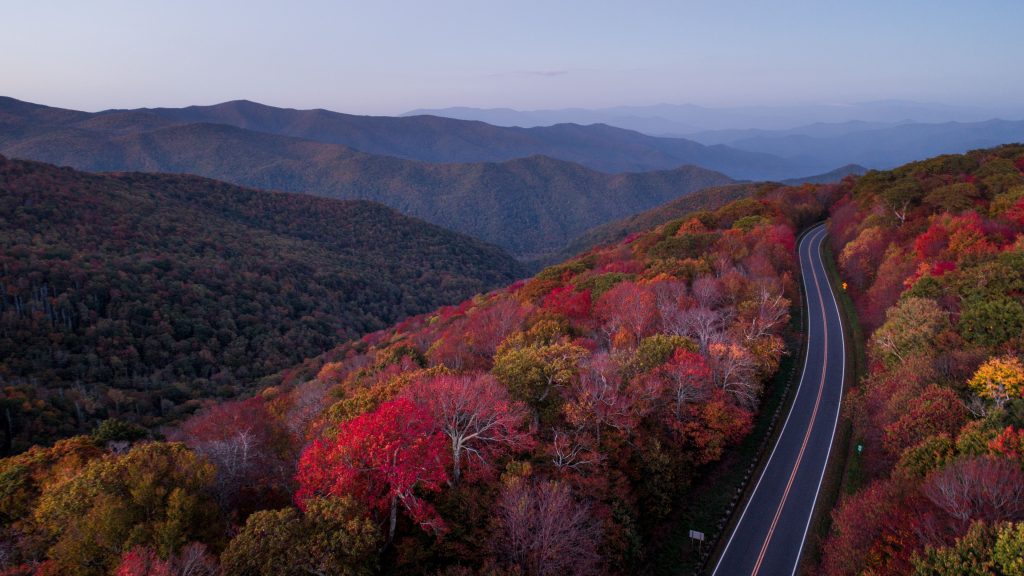
The short answer
- Color starts in West Virginia around the last week of September in the highest country and finishes in the lowest river valleys in early November.
- Elevation drives the calendar. Above 4,000 feet turns first, then color works its way downhill week by week.
- Mid elevations of roughly 2,000 to 3,000 feet usually peak in the middle two weeks of October.
- Valley towns like Charleston, Huntington, Parkersburg, and Martinsburg usually peak in the last week of October into the first days of November.
- Day length sets the timing. Weather sets the brightness, so warm days with cool nights give you the strongest reds.
Updated August 26, 2026.
What this post covers
- When do leaves change in West Virginia?
- Why does elevation matter so much here?
- When is peak color in the highlands?
- When do the lower valleys turn?
- What makes some falls brighter than others?
- Which trees turn first and which hang on?
- Where do you go to see the best of it?
- What should you wear for a fall color drive or hike?
- Frequently asked questions
When do leaves change in West Virginia?
Leaves change in West Virginia over about a six week window, from the last days of September to the first days of November. The high country in Tucker, Randolph, Pocahontas, and Grant counties goes first. The Ohio Valley, the Kanawha Valley, and the Eastern Panhandle go last.
A useful way to think about it is one moving line rather than one date. Color starts on the highest ridges and drifts downhill and eastward across the state. If you miss it at Dolly Sods, you can usually chase it down to a lower spot a week later and still catch it.
West Virginia Tourism publishes a fall color report and map each season, and it is the thing to check before you drive four hours. Timing shifts a week either direction depending on the summer, so a live report beats any fixed calendar.
Why does elevation matter so much here?
Elevation matters because temperature drops as you climb, and West Virginia has more vertical range than most states east of the Mississippi. Spruce Knob sits near 4,863 feet. Point Pleasant sits around 570 feet. Those two places are having different autumns on the same weekend.
The rough rule people use is about a week of difference for every 1,000 feet of elevation, and color moving downhill roughly 100 feet a day at the peak of the turn. It is a rule of thumb, not a law, but it holds up well enough for planning. Aspect matters too, since north facing slopes and cold hollows turn a little ahead of sunny south facing ones.
This is also why a single drive can show you three stages at once. Come down off Corridor H or Route 219 in mid October and you go from bare birch on top to full color midway to summer green at the bottom.
When is peak color in the highlands?
The highlands usually peak from the last week of September into the second week of October. Canaan Valley, Blackwater Falls, Dolly Sods, Bear Rocks, Snowshoe, and the Highland Scenic Highway all sit high enough to turn ahead of everywhere else in the state.
The red maples and the blueberry and huckleberry heath on the Sods often color up before the trees do, which is why Bear Rocks photographs so well in early October. The spruce stays green all year and gives you that dark backdrop the reds play off. Frost comes early up there, so plan for morning temperatures well below what your phone says for the nearest town.
Early October weekends in the highlands are busy. Cabins in Tucker and Pocahontas counties book months out, and the Route 32 corridor through Canaan gets slow. Go on a weekday if you can, or start before daylight.
When do the lower valleys turn?
The lower valleys usually peak from around the third week of October into the first week of November. That covers Charleston, Huntington, Parkersburg, Morgantown, Wheeling, and the Eastern Panhandle around Martinsburg and Charles Town.
The New River Gorge splits the difference in an interesting way. The rim overlooks at Grandview and Hawks Nest often color before the trees down along the water, so you can be looking at a green river corridor from an orange overlook. Mid to late October is the safe bet there.
Oaks dominate a lot of the lower slopes, and oaks are late. That is why valley color often runs into November and finishes as a rusty bronze rather than a bright red.
What makes some falls brighter than others?
Shortening daylight triggers the change, so the timing is fairly reliable year to year. Weather controls how good it looks. The best color comes from a stretch of warm sunny days followed by cool nights that stay above freezing.
Sugars build up in the leaf during those bright days and get trapped when the nights turn cold, and that is what makes the reds in maple, black gum, and sumac. A dry summer usually means leaves drop early and the color runs more brown than red. A wet, cloudy September tends to mute everything.
A hard early freeze is the one that ruins a season outright. It kills leaves before they finish coloring, and they go straight to brown and fall. Wind and heavy rain during peak week can also strip a ridge in a day or two.
Which trees turn first and which hang on?
Black gum and sumac turn first, sometimes in early September while everything around them is still green. Then come the maples, which do most of the heavy lifting for red and orange. Birch, hickory, poplar, and beech bring the yellows through October.
Oaks are the stragglers. Red and white oak often hold color into November, and some young oaks keep dead leaves on the branch all winter. Locust tends to drop early and quietly without much show at all.
If you scout early season squirrel woods you already know this rhythm, because the timing of the leaf drop changes what you can see through the canopy. The same weeks that open up the treetops for hunting are the ones that pull the color off the ridges. Our post on when squirrel season opens in West Virginia lines up almost exactly with the first turn in the highlands.
Where do you go to see the best of it?
For the earliest color, go high: the Highland Scenic Highway on Route 150, Canaan Valley, Blackwater Falls, Dolly Sods, and the Cass area. For mid October, the New River Gorge rim, Babcock State Park and the Glade Creek Grist Mill, Seneca Rocks, and Coopers Rock outside Morgantown are hard to beat.
For late color, drive the Ohio River towns, the Greenbrier Valley, or the Eastern Panhandle back roads. Cathedral State Park near Aurora is worth a stop any time in that window because the old hemlocks frame everything else.
Mid October also means home football weekends, and Morgantown color and a noon kickoff make a good pairing if you plan the traffic. If you are heading to the stadium after a morning at Coopers Rock, check what you can carry into a WVU football game before you pack the car so you are not walking a bag back.
What should you wear for a fall color drive or hike?
Dress for the elevation you are going to, not the one you left. A 55 degree morning in Elkins can be 38 degrees with wind on top of Dolly Sods, and the exposed heath up there has nothing to break it. Layers you can shed by noon beat one heavy coat.
A fleece under a wind shell handles almost every October day in the mountains. Add a warm hat and gloves for sunrise at an overlook, because standing still in the wind is colder than hiking. Long pants matter too, since a lot of the good viewing involves brushy trails and briars.
Dickies Oakport Coaches Jacket

A coaches jacket is the right weight for an October leaf drive in the middle elevations. It cuts wind at an overlook, layers over a flannel or a hoodie when the sun drops behind a ridge, and packs down small enough to leave in the truck. For the coldest highland mornings you will still want fleece under it.
- Wind resistant shell for overlook stops
- Layers over flannel or fleece
- Packs down for the truck
Kids run hot until they stop moving, then they get cold fast. A midweight fleece is the piece that keeps a short hike from ending early, and it doubles as the layer under a rain shell if the weather turns. Anything you have to zip and unzip repeatedly should be simple enough for them to work themselves.
Columbia Youth Steens Mountain Fleece

This is the classic kids fleece for shoulder season, and it earns its keep from October through deer season. It layers under a jacket on cold overlook mornings and works alone once the sun is up. Buy a size with room for a long sleeve shirt underneath.
- Midweight fleece for shoulder season
- Works alone or as a layer
- Sized for room underneath
If you spend your fall mornings above 3,000 feet, a light insulated jacket is worth having in the vehicle. Sunrise at Bear Rocks in late October can be genuinely cold, and you will stand around longer than you planned. The Columbia Steens Mountain fleece is the men’s version of that same midlayer job, and a pair of cold weather hiking pants covers the legs on brushy overlook trails.
Helly Hansen Jade Puffer Jacket

Helly-Hansen Women's Jade Puffer Jacket, 718 Sepia Houndstooth Aop, X-Large
For early morning photo stops and cold overlooks, a light puffer is warmer per ounce than another sweatshirt. It stuffs into a day pack once the sun gets on the ridge. Pair it with a wind shell if rain is in the forecast, since puffers and steady drizzle do not get along.
- Light insulation for cold sunrises
- Stuffs into a day pack
- Pairs with a wind shell
More fall layering picks land in the deals section through September and October if you are outfitting the whole family before the first cold snap.
Frequently asked questions
When is peak fall color in Canaan Valley?
Canaan Valley and the surrounding high country usually peak from the last few days of September into the second week of October. It runs earlier than almost anywhere else in the state because of the elevation and the cold air that settles in the valley. Check the state tourism fall color report the week before you go, since the window shifts about seven days year to year.
Do leaves change earlier in West Virginia than in surrounding states?
In the high country, yes. The Allegheny highlands turn ahead of most of Virginia, Ohio, Kentucky, and the lower parts of Pennsylvania because of elevation. West Virginia’s own river valleys turn on about the same schedule as neighboring lowland areas, in late October.
Does a dry summer ruin fall color?
It usually dulls it and moves it earlier. Drought stress makes trees drop leaves before they finish coloring, so you get more brown and a shorter peak. A summer with steady rain followed by sunny days and cool nights in September gives the best result.
When do the leaves actually fall off in West Virginia?
Leaf drop follows peak color by roughly one to two weeks, so the highlands are mostly bare by mid to late October and the valleys by mid November. Wind and heavy rain can strip a ridge in a single day. Oaks are the exception and often hold leaves well into winter.
Planning around it
If you only get one trip, aim for the second week of October and pick your elevation once you see the color report. That week gives you the widest spread of options, from bare ridges up high to full color in the middle country. Weekdays are quieter and the light at the overlooks is the same.
Book the cabin early, put a fleece and a hat in the vehicle even if the forecast says 70, and give yourself more driving time than the map suggests. Mountain roads in October are full of people going 25 with their phones out the window, and honestly, so are you.
