

The short answer
- Heating a typical West Virginia house entirely with wood takes about 3 to 5 full cords over a winter.
- Running a stove as supplemental heat on cold evenings and weekends takes 1 to 2 cords.
- An open fireplace used mostly for atmosphere burns half a cord to a cord.
- A full cord is 128 cubic feet, stacked 4 feet high by 4 feet deep by 8 feet long. A rick or face cord is usually about a third of that.
- Dense hardwoods like black locust, hickory and oak hold roughly 60 percent more heat per cord than poplar or white pine, so species shifts your number.
- Order in July or August so green wood has time to season before you need it.
What’s in this guide
- How much firewood do you need for a winter?
- What is a cord, and what is a rick?
- How do you calculate your own firewood number?
- Does the type of wood change how much you need?
- How does West Virginia weather change the math?
- How much space does a winter’s worth of firewood take up?
- When should you order firewood for winter?
- How do you tell if you got a full cord?
- Frequently asked questions
Most homes that heat primarily with wood in West Virginia burn 3 to 5 full cords over a winter. If your stove is supplemental, meaning you light it on cold evenings and let the furnace or heat pump carry the rest, 1 to 2 cords usually covers it. An open fireplace you use for atmosphere on holidays and snow days rarely goes past a cord.
Updated July 26, 2026. Late July is when the sellers with good seasoned wood start filling their order books, so this is the right month to work out your number instead of guessing in November.
How much firewood do you need for a winter?
Here are the ranges most wood burners land in, assuming a mix of decent Appalachian hardwood and a full October through March heating season.
- Primary heat, modern airtight stove, 1,500 to 2,000 square feet, decent insulation: 3 to 4 cords.
- Primary heat, older drafty farmhouse or a stove that has to fight a bad floor plan: 4 to 6 cords.
- Primary heat, outdoor wood boiler: 6 to 10 cords, since those things eat wood.
- Supplemental stove or insert, run a few nights a week: 1 to 2 cords.
- Open masonry fireplace, occasional fires: half a cord to a cord.
- Weekend cabin used a dozen times over the cold months: half a cord.
If you have never burned a full season before, order at the middle of your range and build a buffer. Wood that goes unburned does not spoil. A cord left over in April is a cord you do not have to scramble for next December, and by then it is another year drier.
What is a cord, and what is a rick?
A full cord is 128 cubic feet of tightly stacked wood, traditionally measured as a stack 4 feet high, 4 feet deep, and 8 feet long. That is the only unit with a legal definition in most states, and it is the one you should insist on when you talk price.
A rick, face cord, or short cord is one stack 4 feet high and 8 feet long, cut to whatever length that seller uses. With 16-inch pieces, that works out to about a third of a full cord. With 24-inch pieces it is half a cord, which is why two sellers quoting “a rick” can be selling wildly different amounts of wood.
Ask two questions before you agree to anything: is that a full cord or a face cord, and how long are the pieces cut. Most stoves take 16 to 18 inch splits, and anything longer than your firebox is firewood you have to re-cut in the cold.
How do you calculate your own firewood number?
The fastest honest method is burn rate. A stove running around the clock through a genuine cold stretch goes through roughly a cord every three to four weeks on good hardwood, so count the weeks you expect to burn hard and divide.
Say you burn full time from mid-December through February, about ten hard weeks, plus another eight shoulder weeks of evening fires at maybe half the rate. That is roughly 3 cords for the hard stretch and 1 more for the shoulders. Four cords, which is exactly where most full-time burners in the state end up.
If you want to check that against heat numbers, work backward. An average 1,800 square foot house in a West Virginia winter needs somewhere around 60 to 80 million BTU of delivered heat, a cord of seasoned oak holds about 24 million BTU, and a decent stove delivers maybe 70 percent of that up the room instead of the flue. Divide it out and you get about four cords again.
Do not forget kindling and small stuff. If you start a fresh fire most mornings, you will go through a good wheelbarrow of kindling a month, which is more than the scrap pile behind the shed usually provides.
MEEPOCAN Manual Kindling Splitter

A lock-on kindling splitter is for anyone who wants a steady supply of small wood without swinging a hatchet at a wobbly round. You set a piece on the blade and drive it down with a mallet, so your hands stay well away from the edge. It is the sort of thing that makes a five-minute job out of a whole week’s kindling.
- Lock-on metal safety guard keeps hands clear of the blade
- Portable enough for camp or the woodshed
Does the type of wood change how much you need?
Yes, and by more than most people expect. A cord of black locust or hickory carries roughly 60 to 70 percent more heat than a cord of yellow poplar, so a poplar-heavy load means you need noticeably more of it to hold the same house at the same temperature.
| Species | Approximate million BTU per cord |
|---|---|
| Black locust | 27 |
| Shagbark hickory | 27 |
| White oak | 25 |
| Sugar maple | 24 |
| Red oak | 24 |
| White ash | 23 |
| Black cherry | 20 |
| Red maple | 19 |
| Yellow poplar | 16 |
| Eastern white pine | 13 |
West Virginia woods are generous here. Red oak, hickory, ash, cherry and locust are all common, and any mixed hardwood load out of a local lot will average somewhere in the low twenties. If a seller is vague about species or the splits look suspiciously light for their size, assume poplar and soft maple and buy an extra cord.
Species also changes how you burn it. Poplar and pine light fast and are useful for taking the chill off an October morning, while oak and locust are what you want on the coals at bedtime. A good stack has some of both.
How does West Virginia weather change the math?
Elevation matters more than latitude here. A cabin in Tucker County or up around Snowshoe can burn a cord or two more than the same house in Huntington or Martinsburg, because the cold starts earlier, ends later, and sits harder in between.
The practical heating season for most of the state runs mid-October to mid-April, with the serious burning from Christmas through February. Higher counties routinely see fires in September and again in May. If you live above 2,500 feet, take your calculated number and add a cord.
Wind exposure and house age do their share too. An old farmhouse on an open ridge loses heat fast enough to double the burn rate of a tight house down in a hollow, no matter what the thermometer says.
How much space does a winter’s worth of firewood take up?
Stacked 4 feet high in single rows of 16-inch splits, one full cord runs about 24 linear feet. Four cords is around 96 feet of row, which usually becomes three 32-foot stacks or two long rows down a fence line.
Keep the wood off the ground on pallets, rails or a rack, top covered and sides wide open. Ground contact wicks moisture back into wood you already paid to dry, and a full tarp over the sides traps humidity and grows mold. Sun and moving air do the work.
Racks are worth it if your yard has no natural end supports. If you would rather build than buy, bracket kits let you make a rack any length from two-by-fours, and I go into the options in the rack bracket and splitting tool roundup.
Shelter Adjustable Log Rack Kit
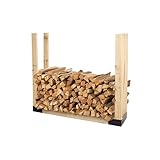
This adjustable steel rack suits anyone who needs a week or two of wood close to the door rather than the whole winter’s supply out back. The length and height both adjust, so it fits a porch corner or a garage wall without custom cutting. Pair it with a covered bulk stack further out and you are not hauling armloads through mud in January.
- Length and height both adjust to the space you have
- Powder coated steel for outdoor or porch storage
Keep a pair of heat resistant stove gloves by the door as well. Handling splits, reloading a hot firebox and moving a rack full of rough oak all go easier with something between your hands and the wood.
When should you order firewood for winter?
Order in July or August. That is when sellers still have last year’s seasoned wood on the lot, prices have not spiked with the first cold snap, and you have three or four months of hot weather left to finish drying anything that is borderline.
Green wood cut this summer is not winter wood. Oak commonly needs a year or two split and stacked before it burns well, while ash, cherry and maple can be ready in six to twelve months, and I break the timelines down in the guide on how long firewood takes to dry. Burning wet wood costs you heat and packs the flue with creosote, which is a chimney fire waiting for a windy night.
If you cut your own, summer is also when the saw work should happen. A sharp chain makes the difference between a productive Saturday and a wrestling match, and the chains that hold an edge in hardwood are worth sorting out before you drop the first tree.
Pure Garden Fatwood Fire Starters

A bulk box of fatwood is the easy answer if your kindling supply is thin or your wood is a little damper than you would like. The resin in the pine lights from a single match and burns long enough to catch splits that would fight a newspaper start. One box goes a long way across a season of daily fires.
- Resin-rich pine lights from one match
- Bulk box covers a full season of daily fires
How do you tell if you got a full cord?
Stack it and measure it. Length times height times depth in feet should come to 128 cubic feet, and if it comes to 90, you got a face cord and paid for a full one.
Loose thrown wood is the usual place things go sideways. A heaped 8-foot pickup bed holds roughly half a cord once stacked, and a standard short-bed truck holds less than that, so a “truckload” tells you nothing on its own. Ask for the wood stacked on delivery or measure the pile before the driver leaves.
Buy from someone local with a name and a repeat customer base. Firewood is one of those trades where reputation does more for you than any inspection, and a seller who plans to come back next year cuts an honest cord.
Frequently asked questions
How many ricks are in a cord?
Usually three, if the wood is cut to 16 inches. A rick or face cord is a stack 4 feet high and 8 feet long at whatever length the pieces are cut, so 24-inch pieces make a rick equal to half a cord. Always confirm both the stack size and the cut length before you compare prices.
Will 2 cords of wood last a winter?
For supplemental heating, yes. Two cords covers a stove run on cold evenings and weekends while another heat source handles the rest of the house. If wood is your only heat in West Virginia, two cords will likely run out sometime in January.
How much firewood does an open fireplace use?
Half a cord to a cord for a season of occasional fires. Open fireplaces are poor heaters because most of the warmth goes up the chimney along with air you already paid to heat. If you want real output from that opening, an insert changes the math completely.
Can I burn wood I cut this summer?
Not oak, and not comfortably. Freshly cut wood can run over 50 percent moisture, and it needs to get under 20 percent to burn clean. Ash, cherry and maple split and stacked in July might be usable by late winter, but oak needs a full year or more.
Does firewood go bad if I do not burn it?
Not if it is stored right. Wood kept off the ground with a covered top and open sides will hold for years and only gets drier. Wood sitting on bare dirt under a full tarp starts punking out in a season or two, and punky wood gives you far less heat per piece.
Run your own numbers this week rather than in October. Count the weeks you expect to burn, pick your range, add a cord if you are up high or in an old drafty house, and call a seller while the good seasoned wood is still sitting on their lot.
Then spend the rest of the summer on the boring parts: pallets down, rack up, kindling split, chain sharp. If you want to knock out the gear side while the weather is still warm, the current tool and outdoor deals are the place to start.
