
Key takeaways
- Heating a house full time with a wood stove takes about 3 to 5 full cords of seasoned hardwood per winter.
- A stove used for evenings, weekends, or backup heat takes 1 to 3 cords. An open fireplace burned for atmosphere often takes less than 1.
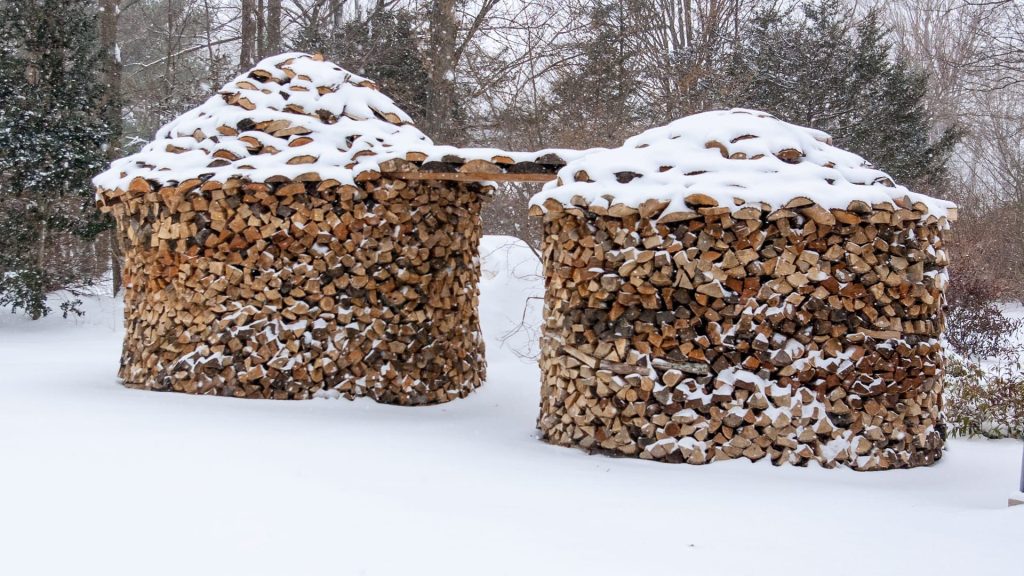
- A full cord is 128 cubic feet, stacked 4 feet high by 4 feet deep by 8 feet long. A rick or face cord of 16-inch wood is about one third of that.
- Oak and hickory carry roughly 24 to 27 million BTU per cord. Poplar, pine, and sycamore carry about half, so soft wood means buying 40 to 50 percent more volume.
- Higher-elevation counties like Randolph, Pocahontas, and Tucker run a longer, colder heating season than the Ohio Valley. Add a cord if you live up top.
Updated August 19, 2026.
Most people heating a West Virginia house entirely with wood go through 3 to 5 full cords in a winter. If the stove is backup heat or an evening fire while the furnace does the heavy lifting, 1 to 3 cords covers it. An open masonry fireplace burned a couple nights a week rarely takes more than a cord.
Those are starting numbers, not your number. House size, insulation, elevation, wood species, and how cold you keep the place all move the total, sometimes by half a cord in either direction.
On this page
- How much firewood does one winter take?
- What is a cord, and what is a rick?
- How do you calculate your own firewood number?
- Does the type of wood change how much you need?
- How much wood does a West Virginia winter take?
- How much firewood do you burn in one night?
- How much space does a winter’s worth of wood take up?
- Frequently asked questions
How much firewood does one winter take?
Here is the range most households land in, assuming seasoned hardwood and a modern airtight stove.
| How you burn | Full cords per winter |
|---|---|
| Wood is the only heat, 1,500 to 2,000 sq ft | 3 to 5 |
| Wood is the only heat, small cabin or 1,000 sq ft | 2 to 3 |
| Stove carries the day, furnace covers nights | 2 to 3 |
| Evenings and weekends only | 1 to 2 |
| Open fireplace, atmosphere fires | 0.5 to 1 |
| Outdoor wood boiler, whole house plus hot water | 6 to 10 |
Two things push you toward the high end fast. One is a drafty older farmhouse with single-pane windows and an uninsulated crawl space. The other is burning wood that never got dry, because wet wood spends its heat boiling off water instead of warming your living room.
If you are not sure your stack is ready to burn, the drying timeline matters more than the quantity. Splitting and stacking now, in late August, gives oak almost no chance of being ready this year, which is covered in more detail in the post on how long firewood takes to dry.
What is a cord, and what is a rick?
A full cord is 128 cubic feet of tightly stacked wood: 4 feet high, 4 feet deep, 8 feet long. That measurement is the legal standard in most states, and it is the only unit that means the same thing to everybody.
A rick, a face cord, or a stove cord is 4 feet high by 8 feet long by whatever length the pieces are. With 16-inch splits, that stack is one third of a full cord. With 12-inch splits it is one quarter, and with 24-inch splits it is half.
So when a seller quotes you a rick, ask how long the pieces are before you compare prices. Three ricks of 16-inch wood equal one cord. Three ricks of 12-inch wood do not.
A pickup bed is another loose unit worth translating. A short-bed half-ton hauls roughly a third of a cord stacked, and a full-size 8-foot bed loaded level with the rails holds about half a cord.
How do you calculate your own firewood number?
The most accurate method is to convert your old heating bill. One cord of good hardwood burned in an efficient stove delivers about as much usable heat as 150 to 175 gallons of fuel oil, 200 to 250 gallons of propane, or 4,500 to 5,000 kilowatt-hours of electric resistance heat.
Pull last winter’s totals and divide. If you burned 600 gallons of propane, you are looking at roughly 3 cords to replace all of it, and about 1.5 cords to replace half.
If you have no bill to work from, use floor area. Budget about one cord for every 500 square feet you actually intend to heat with wood, then adjust up for poor insulation, high ceilings, or a house that sits in a windy gap.
Then check the answer against daily burn. Dry oak weighs somewhere around 3,600 to 4,000 pounds per cord, and a stove running hard on a cold day eats 40 to 50 pounds. That works out to roughly 80 to 100 hard days per cord, which lines up with the 3-to-5-cord range for a full WV season.
Does the type of wood change how much you need?
Yes, and by more than most people expect. Heat comes from wood density, so a cord of hickory, locust, white oak, or sugar maple carries roughly 24 to 27 million BTU, while a cord of poplar, sycamore, or white pine carries 13 to 16 million.
That means a stack of yellow poplar has to be about 50 percent bigger to get you through the same winter. Four cords of oak becomes six cords of poplar, plus a lot more trips to the wood box.
Mixed loads are normal around here, and mixed is fine. Poplar and pine light easily and work well for shoulder-season mornings in October and April, when you want an hour of heat and not an all-night burn.
What matters more than species is moisture. Wood at 20 percent moisture or below burns hot and clean, and wood at 35 percent smolders, wastes heat, and coats your flue with creosote faster than most people think.
How much wood does a West Virginia winter take?
Elevation splits the state into two different answers. Charleston, Huntington, Parkersburg, and the Eastern Panhandle river towns have a milder, shorter heating season, and 3 cords often covers a full-time stove there.
Elkins, Davis, Marlinton, and anywhere up on the Allegheny Front run colder and longer, with heating weather that can start in early October and hang on into May. Plan on 4 to 6 cords if wood is your only heat up there.
Wind exposure matters too. A house on a ridge burns noticeably more than the same house down in a hollow, because wind strips heat off walls and pulls it through every gap around doors and windows.
Buy early either way. Late August and September are when seasoned wood is easiest to find at a reasonable number, and when you still have dry weeks left to finish drying anything borderline. By the first hard freeze, the good sellers are booked and the only wood left is green.
How much firewood do you burn in one night?
An overnight load in a mid-size stove is usually 4 to 6 splits, or roughly 20 to 30 pounds. That is about 1 percent of a cord, so a single cord holds somewhere near 100 overnight loads if you burn nothing during the day.
A full day of continuous heat in January runs 40 to 50 pounds. Shoulder-season days in late October need maybe 15 to 20 pounds, since you are just taking the chill off in the morning and evening.
Open fireplaces burn faster and give back less. A fireplace can go through an armload an hour and still send most of the heat up the chimney, which is why fireplace-only households buy less wood but stay colder.
Kindling is its own small budget. A five-gallon bucket of dry kindling lasts a couple weeks of daily fires, and splitting it down from scrap is easier and safer with a stationary splitter than with a hatchet on a cold porch.
MEEPOCAN Manual Kindling Splitter

A manual kindling splitter is for anyone who starts a fire every morning and would rather not swing a hatchet in the dark. You set the piece on the blade and drive it down with a mallet or a chunk of log, so your hands stay away from the edge. It handles the small stuff, not rounds, so keep the maul for the big splits.
- 8.5 inch hardened straight blade with a lock-on safety guard
- Splits kindling with a mallet strike instead of a swung hatchet
- Portable electroplated steel body for porch or camp use
How much space does a winter’s worth of wood take up?
One full cord occupies a stack 4 feet high and 16 feet long at 16-inch depth. Four cords is 64 running feet of that, or two 32-foot rows, which is more yard than people picture when they order.
Keep the stack off the ground on pallets or rack brackets so the bottom row does not wick moisture and rot. Leave a few inches of air between rows, and orient the rows so prevailing wind runs down the length of them.
Cover the top and leave the sides open. A tarp wrapped all the way around traps moisture and undoes a summer of drying, and a cover on just the top few inches sheds rain and snow while the sides keep breathing.
Keep about a week of wood closer to the house on a small rack, and leave the main stack out where it gets sun and wind. Handling that much split wood is rough on hands, so a set of gloves that stand up to heat and splinters pays for itself by Thanksgiving.
Shelter Adjustable Firewood Rack Kit
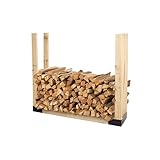
An adjustable steel rack kit works for the porch stack or the week’s supply by the back door. The adjustable length lets you size it to the space you have instead of the space the box assumed. Keep it under an overhang or add a top cover, since the rack keeps wood off the ground but does not shed rain.
- Adjustable length and height to fit the space you have
- Powder-coated steel keeps the bottom row off wet ground
- Works as a porch stack or a week's supply by the door
If you cut your own, the cutting is where the season gets long. A sharp chain moves through a truckload in a fraction of the time a dull one does, and the guide on chains that hold an edge in firewood covers what to look for. There is also a running list of rack brackets and splitting tools worth watching if you are building out the wood yard this fall.
Frequently asked questions
How many ricks are in a cord?
Three ricks of 16-inch wood make one full cord. If the pieces are 12 inches, it takes four ricks, and if they are 24 inches, two ricks do it. Always ask the seller for the piece length before you compare one price to another.
Is 3 cords enough firewood for a winter?
Three cords of dry hardwood is usually enough for a well-insulated house of about 1,500 square feet heated full time with an efficient stove. It gets tight in a drafty older house, at higher elevation, or if the wood is soft or damp. Order 4 the first year and see where you land in March.
When should I buy firewood for winter?
Buy in late summer or early fall. Prices and availability are better before the first cold snap, and anything sold as seasoned still gets a few dry weeks in your stack before you need it. Buying in December usually means paying more for wetter wood.
Does a fireplace use more wood than a wood stove?
Per hour of burning, yes. An open fireplace pulls heated room air up the chimney and returns only a small share of the wood’s heat, while a modern stove keeps most of it. People with fireplaces often buy less wood overall simply because they burn fewer hours.
How do I know if my wood is dry enough to burn?
Dry splits are lighter than they look, show checking cracks on the ends, and clack rather than thud when you knock two together. A moisture meter on a freshly split face should read 20 percent or lower. If you want the full timeline by species, see the companion post on planning a winter’s wood supply.
Start with the range, then correct it with your own numbers. Mark the stack where it stood on December 1, check it again February 1, and you will know exactly what your house burns without guessing next August.
And order a little more than the math says. A half cord of extra wood stacked to dry costs you some yard space, and running short in the second week of February costs a lot more than that. Burning that much wood also means keeping up with chimney cleaning, so plan for it.
