
Quick takeaways
- West Virginia’s wild elk live in the southern coalfields. Most sightings come from Logan and Mingo counties, mainly around the Tomblin Wildlife Management Area.
- A guided elk tour out of Chief Logan State Park is the most reliable way to see them, because guides know which reclaimed mine fields the herd is using.
- Go at first light or the last hour before dark. Fall is the best season, because the bulls are bugling during the rut.
- Bring binoculars and keep your distance. Elk are big, unpredictable animals, and a bull in rut doesn’t care much for people.
Updated October 14, 2026
The best place to see elk in West Virginia is the southern coalfields, mainly the Tomblin Wildlife Management Area in Logan and Mingo counties. If you want the best chance of seeing them, book a guided elk tour through Chief Logan State Park near the town of Logan.
The herd spends a lot of its time on old reclaimed strip mines, where wide grassy benches have replaced the hilltops. Show up around dawn or dusk in fall and you have a real shot at hearing a bull bugle across a hollow, which is something I never expected to hear in this state growing up.
In this guide
Are there wild elk in West Virginia?
Yes, West Virginia has a free-ranging wild elk herd again. Elk lived in these mountains long ago but were wiped out in the 1800s, and the state brought them back through a restoration program that began in 2016.
The West Virginia Division of Natural Resources released elk from Kentucky first, and later from Arizona. They chose the southern coalfields because the reclaimed mine land there gives elk the open grassland they need, with forest close by for cover.
The herd has grown since those first releases, but it is still small next to Kentucky’s herd across the Tug Fork. For current herd estimates and program news, go straight to the WV DNR website instead of trusting an old number you find somewhere.
What is the best place to see elk in West Virginia?
The Tomblin Wildlife Management Area in Logan and Mingo counties is the center of elk country in West Virginia. Most of the original releases happened in that area, and the herd still uses it heavily.
The wider elk management zone also takes in parts of the surrounding southern counties, including Lincoln, Wayne, Boone, McDowell and Wyoming. Elk wander, so a few show up well outside the core area, but nobody can promise you a sighting in those places.
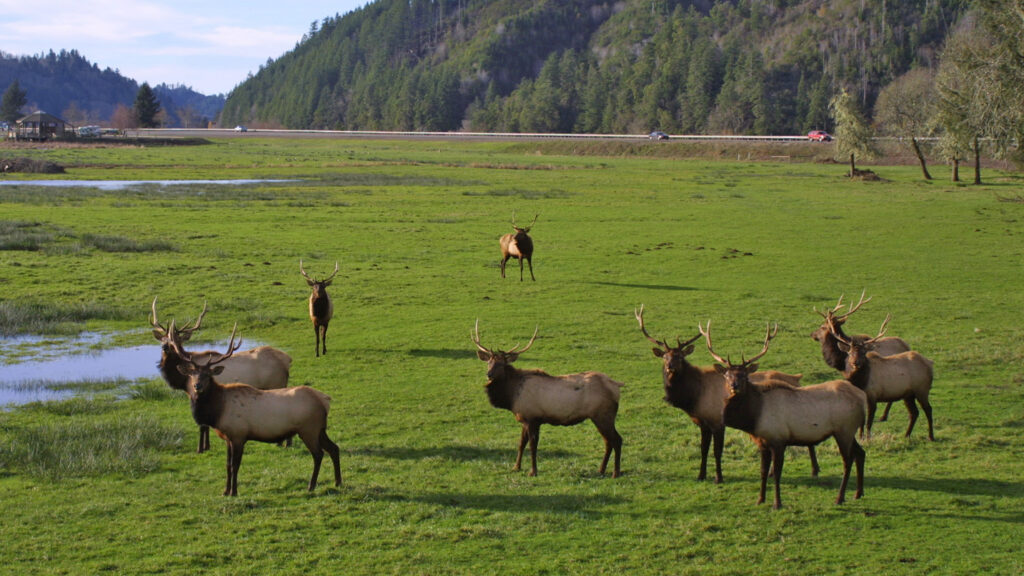
What you’re looking for is open reclaimed mine ground: wide grassy benches and flats where there used to be ridgetops. Elk graze out in the open early and late, then slip back into the timber when the day warms up.
Should you take a guided elk tour?
For most people, yes. A guided tour from Chief Logan State Park is the easiest way to see elk in West Virginia, especially on your first trip.
The tours run through West Virginia State Parks. The big advantage is access, because a lot of the best elk ground sits behind gates on mine and company land that you can’t drive into on your own. Guides also keep track of where the herd has been feeding that week, and that changes more than you’d think.
Tour dates, start times and booking rules change from season to season, so check the WV State Parks website for the current schedule. Fall weekends fill up early, so book ahead if you have a date in mind.
When is the best time to see elk?
Fall is the best season, and the best times of day are first light and the last hour before dark. The rut runs from about September into October, and that’s when bulls bugle, gather cows, and spend more time out in the open.
Winter is good too, because elk bunch up on open ground and the bare trees make them easier to spot. Summer is the hardest season. Elk don’t handle heat well, so on a muggy July afternoon they stay deep in the shade.
A fall trip pairs well with leaf season, too. The southern counties sit lower than the high country in Pocahontas or Tucker, so colors there usually turn later, and our guide to peak fall foliage by elevation can help you time it. If you’re planning a longer drive, here are a few more places to see fall colors in West Virginia on the way down or back.
Can you find elk on your own?
You can, but your chances are lower and you need to follow the rules about access. Stay on public roads and open public land, and never go around a gate or onto posted property, even if you can see elk on the other side.
Plan for this country before you go. Cell service drops out in a lot of hollows, the roads are narrow and steep, and coal trucks and side-by-sides from the Hatfield-McCoy trails share the road. Download your maps ahead of time and tell somebody where you’re headed.
Fall is hunting season in these same hills. Wear some blaze orange if you’re walking anywhere off the pavement, and look at when deer season opens in West Virginia so you aren’t surprised by a full parking pull-off on a November morning.
What should you bring for elk viewing?
Binoculars matter most, followed by warm layers and something hot to drink. Elk often stand far across a mine bench, and through bare eyes a bull just looks like a brown spot.
Morning trips start in the dark, so a headlamp helps. One with a red light mode, like the ones in our red light headlamp rankings, lets you see your footing without lighting up the whole field. Layers matter too, because an October morning on an exposed bench can feel ten degrees colder than town.
Keep your distance from the herd. Great Smoky Mountains National Park asks visitors to stay at least 50 yards from elk, and that’s a sensible rule here as well. If an elk changes what it’s doing because of you, you’re too close, and a rutting bull will charge.
Bushnell PowerView 2 10×42 Binoculars

A 10×42 binocular is the right all-around choice for elk viewing, because it lets in enough light for dawn and dusk and is steady enough to hold by hand. This Bushnell is a good fit for anyone who wants a dependable pair to keep in the truck all season.
- 10x magnification with 42mm objective lenses for low light
- Steady enough to hold by hand at dawn and dusk
Bushnell PowerView 2 20×50 Binoculars

Elk often feed on the far side of a wide mine bench, and 20x magnification brings them in much closer. The tradeoff is shake, so rest these on a car window or fence post, or pair them with a support like the one below.
- 20x magnification for elk far across mine benches
- 50mm objective lenses gather light early and late
Barska Accu-Grip Handheld Tripod System

Barska Accu-Grip Handheld Tripod System for Cameras, Spotting Scopes, Binoculars
A handheld support system steadies high-power binoculars, so you can watch a bull for several minutes without your arms giving out. It’s a small, inexpensive add-on that makes the most sense if you go with 20x glass.
- Steadies binoculars, spotting scopes and cameras
- Compact handheld support for long viewing sessions
If you’re shopping for other fall gear before a trip, our current deals page gets updated through the season.
Frequently asked questions
Are there wild elk in West Virginia?
Yes. The WV DNR began bringing elk back to the southern coalfields in 2016, using animals from Kentucky and Arizona. The herd now ranges free, mainly in Logan and Mingo counties.
Where is the best place to see elk in West Virginia?
The Tomblin Wildlife Management Area in Logan and Mingo counties is the core of elk country. Guided tours out of Chief Logan State Park give you the best odds, because they reach gated land where the herd feeds.
When do elk bugle in West Virginia?
Bulls bugle during the rut, which runs roughly from September into October. Your best chance of hearing them is at dawn and in the last hour of daylight, on cool and calm mornings.
Can you hunt elk in West Virginia?
The elk herd is still part of a restoration program, and you should not assume there is any elk season. Check the WV DNR regulations for the current rules before you go into the field.
Can you see elk in West Virginia without a tour?
Yes, but it’s harder. Stay on public roads and open public land, respect every gate and posted sign, and go out early or late in the day.
If you only make one elk trip, make it a fall weekend: book a tour at Chief Logan, get there early, and dress like it’s colder than it is. Even if the herd stays hidden in the timber that morning, you’ll still see some of the prettiest, quietest country in southern West Virginia.
And if a bull bugles while you’re standing out there in the half dark, you’ll understand why folks keep driving back down Route 119 every October.
