
Key takeaways
- Peak fall foliage in West Virginia happens in October, and elevation decides which week you get it.
- The high country above about 3,500 feet, including Canaan Valley, Dolly Sods, and the Highland Scenic Highway, usually peaks from the last days of September through the first two weeks of October.
- Mid elevations between roughly 2,000 and 3,000 feet usually peak in the middle two weeks of October.
- Low river valleys, the New River Gorge, the Ohio Valley, and the Eastern Panhandle hold color into the last week of October and sometimes the first days of November.
- Color moves downhill at roughly 1,000 feet of elevation per week, so you can chase peak for about a month without leaving the state.
Updated September 16, 2026.
On this page
- When does fall foliage peak in West Virginia?
- How does elevation change the timing?
- Where should you go each week of October?
- Does the weather move the peak date?
- When do the leaves peak in the New River Gorge?
- How do you check color before you drive?
- What should you take on a foliage drive?
- Frequently asked questions
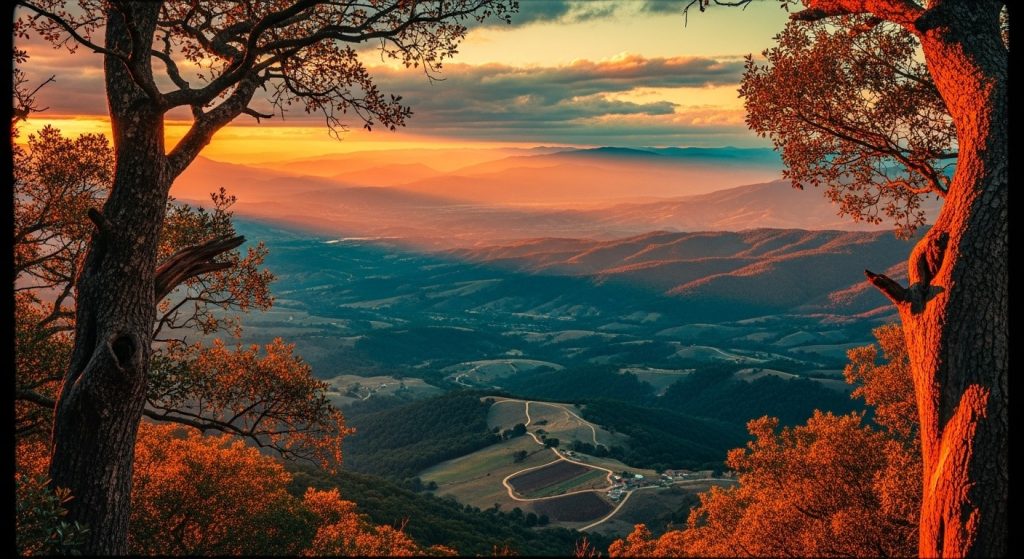
Peak fall foliage in West Virginia lands in October almost everywhere in the state, but the exact week depends on how high you are standing. The mountains above 3,500 feet turn first, often in the last days of September and the first two weeks of October, and the low valleys finish last, holding color into the final week of October and sometimes into early November.
That spread is the whole reason West Virginia is good at this. We have more than 4,000 feet of elevation range, so there is a peak somewhere in the state for about five straight weeks.
When does fall foliage peak in West Virginia?
The statewide window runs from roughly the last week of September to the first week of November, with mid-October being the safest single bet if you can only take one trip. Mid-October catches the high country just past its best and the mid elevations right at theirs, which means you see color no matter which direction you drive.
Any one spot only holds true peak for about a week to ten days. Before that you get patchy yellows, after that you get bare ridgelines and a lot of brown oak. If you have flexibility, plan a weekend and then decide the Thursday before which elevation to aim for.
How does elevation change the timing?
Color drops downhill at roughly 1,000 feet per week, because higher ground cools off sooner and the cold nights are what trigger the change. A ridge at 4,500 feet can be finished while a hollow at 1,200 feet has barely started, and those two places might be twenty road miles apart.
Aspect matters too. North-facing slopes turn ahead of south-facing ones, so a single mountainside often shows two stages at once. In practice you can drive a switchback road in October and watch the season run backwards through the windshield as you descend.
There is also a north-to-south component, but in West Virginia it is small compared to elevation. A hollow in Preston County and a hollow in Greenbrier County at the same height peak within a few days of each other.
Where should you go each week of October?
Aim high early and low late. That single rule will put you in good color most years.
Late September into the first week of October belongs to the highest ground: Spruce Knob, Dolly Sods, Canaan Valley, the Highland Scenic Highway along Route 150, and the country around Snowshoe. Red maple and black gum go first up there, and the birch turns a hard yellow that shows well against the spruce.
The second and third weeks of October are the broad middle: Blackwater Falls, Seneca Rocks, the Greenbrier Valley, Coopers Rock, Babcock, and most of the Monongahela National Forest below the high plateau. This is the stretch with the most reliable color and the most traffic, so start early in the morning. Our guide to the overlooks and drives worth the gas covers specific pullouts in where to see fall colors around the state.
The last week of October and the first days of November go to the low ground: the New River Gorge rim and floor, the Ohio Valley, the Kanawha Valley, and the Eastern Panhandle. Oaks and hickories carry that late show, so expect more rust, bronze, and gold than bright red.
Does the weather move the peak date?
Yes, but usually by days, not weeks. Warm sunny days paired with cool nights in the 30s and 40s produce the best reds, because the sugar stays trapped in the leaf. A run of warm nights mutes everything into yellow.
A dry summer pushes the change a little early and shortens the show, since stressed trees drop leaves faster. A hard freeze can end things overnight at high elevation, and one soaking storm with wind will strip a ridge in an afternoon. If a front is coming, go before it, not after.
When do the leaves peak in the New River Gorge?
The New River Gorge usually peaks in the last ten days of October. The rim sits around 2,000 feet and the river sits closer to 900, so the canyon walls turn from the top down and the gorge stays colorful longer than most single locations in the state.
That late timing lines up with Bridge Day, which falls on the third Saturday in October and brings serious crowds to Fayetteville. If you want the overlooks to yourself, come the following weekend instead. Morning fog sitting in the canyon with color above it is the shot everybody drives there for.
October in the gorge is also the heart of hunting and fishing season across the state, so trailheads and pullouts get busy with more than leaf traffic. If your trip overlaps with either, check when deer season opens in West Virginia and wear something bright on public land.
How do you check color before you drive?
The West Virginia Department of Tourism publishes a fall color map each autumn that updates weekly, and it is the best free tool for timing a trip. State park social media pages are often faster, because rangers post actual photos from that morning.
Webcams at the ski resorts are underrated for this. Snowshoe and Canaan run cameras year round, and a glance tells you more about the high country than any forecast map.
One more trick: watch the elevation you can see from your own porch. When the color reaches a ridge you know the height of, you can figure out where it will be next weekend.
What should you take on a foliage drive?
Layers, a full tank, and binoculars. October in the highlands can start at 28 degrees and finish at 65, and a lot of the best overlooks are an hour from the nearest gas station on roads with no cell service.
Binoculars change the trip more than people expect. From an overlook you are often looking at a mountainside two miles away, and glass turns a wash of orange into individual trees, hawks riding the thermals, and elk or deer feeding in a far clearing. The same pair earns its keep the rest of the year, which is part of why we keep coming back to them in posts like our look at where to find elk in southern West Virginia.
Bushnell H2O 10×42 Binoculars

A 10×42 waterproof pair is the sensible middle for overlook viewing: enough magnification to pick out individual trees across a valley, and a wide enough objective lens to still work in flat morning light. Waterproofing matters here because October fog and drizzle come with the territory in the highlands. This is the kind of pair you leave in the truck all season rather than babying at home.
- 10x magnification with 42mm objective lenses
- Waterproof and fogproof housing
- Non-slip grip for cold, wet mornings
Good socks and boots round it out, since most of the best views involve at least a short walk on wet leaves and loose rock. Wool beats cotton every time in October weather, and our rundown of merino hiking socks worth owning explains why. If you are shopping ahead of the season, the current deals page is where we collect what is worth grabbing.
Frequently asked questions
What is the single best weekend for fall colors in West Virginia?
The middle two weekends of October are the safest choice, because they catch mid elevations at peak with high country color still hanging on nearby. If you want the highlands at their best, aim for the first weekend of October instead. For the New River Gorge, go the last weekend of the month.
Is Dolly Sods or Canaan Valley better for early color?
Both peak early because both sit above 3,200 feet, but Dolly Sods turns first and shows more red from the huckleberry and blueberry in the open heath. Canaan Valley gives you more hardwood color with spruce mixed in. Dolly Sods roads are rough, so allow extra drive time.
How cold does it get on a fall foliage trip?
In the highlands, October overnight lows regularly drop into the 20s and 30s, and daytime highs may only reach the 50s with wind on exposed ridges. Valley towns run ten to fifteen degrees warmer. Pack a hat and gloves even if the forecast for Charleston looks mild.
Does a dry summer ruin the fall colors?
It dulls them and shortens the window rather than canceling it. Drought-stressed trees drop leaves earlier and show more brown, especially in tulip poplar. A wet summer followed by cool clear nights produces the strongest reds.
Where can I see a color map for the state?
The West Virginia Department of Tourism posts a weekly fall color map through the season, and state park pages share same-day photos. Those two sources together beat any national foliage prediction map, which tends to treat the whole state as one elevation.
The short version: go high in early October, go low at the end of it, and let the elevation do the planning for you. If you miss a weekend, drive down instead of giving up, because the color you missed on the ridge is a week away from the valley below it.
Leave earlier than you think you need to. Fog burns off the hollows around mid-morning, the light on the ridges is best before ten, and by noon every overlook on Route 150 has cars parked in the grass. A thermos and a 6 a.m. start beats a perfect forecast.
