
The short answer
- Clean a wood stove chimney at least once a year, and inspect it more often than that.
- Sweep whenever creosote reaches about 1/8 inch, no matter what the calendar says.
- If you heat with wood every day through a West Virginia winter, plan on a fall sweep and a mid-winter check.
- Weekend-only burners and shoulder-season users can usually get by with one sweep a year.
- Wet wood and long damped-down burns build creosote far faster than the type of wood you burn.
Updated September 13, 2026.
What this covers
- How often should you clean a wood stove chimney?
- How do you know when the chimney needs sweeping?
- Does the amount of wood you burn change the schedule?
- What makes creosote build up faster?
- Does burning pine clog a chimney faster?
- How often should you clean the stove pipe itself?
- Can you sweep the chimney yourself?
- When is the best time of year to sweep in West Virginia?
- Frequently asked questions
Clean a wood stove chimney at least once a year, and sweep it any time creosote reaches roughly an eighth of an inch. For a house heated mostly with wood through a real mountain winter, that usually means one sweep in early fall and one look partway through the season.
The annual part comes from NFPA 211, the chimney standard most inspectors and insurance companies reference, which calls for a yearly inspection. Inspection and cleaning are two different jobs. You inspect on a schedule and you clean based on what the inspection shows.
How often should you clean a wood stove chimney?
Once a year is the floor. Daily burners often need two cleanings, one before the season and one around late January, when the flue has taken a couple months of cold nights and slow fires.
Here is the schedule that fits most WV setups. Sweep in September or early October before the first real fire of the year. Then open the cleanout or pull the pipe in mid-winter and look at what has collected.
If you only light the stove on cold weekends or run it as backup heat, one fall sweep will almost always cover you. The stove that gets fed twice a day from October through April is a different animal. That one earns a mid-season check whether you think it needs one or not.
How do you know when the chimney needs sweeping?
Scratch the inside of the flue and measure what is there. When the deposit is about 1/8 inch thick, it is time to sweep. That is roughly the thickness of two stacked quarters, and it is easier to judge than most people expect once you have seen it.
What the deposit looks like matters as much as how thick it is. Light, flaky black soot brushes off with almost no effort and is normal. Crunchy, tar-textured buildup means the flue has been running too cool and you should sweep sooner than planned.
Shiny, hard, glassy creosote is the one to take seriously. That stage does not brush out, it burns hot in a chimney fire, and it needs a professional with the right treatment or rotary gear. Do not keep burning while you think about it.
Other signs worth catching: smoke pushing back into the room on startup, a strong tarry smell on humid days, and a stove that suddenly will not draft the way it used to.
Does the amount of wood you burn change the schedule?
Yes, and it is the most useful way to plan. A rough working rule is to look at the flue after every cord you burn, and sweep whenever the buildup hits that eighth of an inch.
A household that burns one or two cords a season usually cleans once a year and is fine. A household burning four or five cords should count on more than one cleaning, especially if the stove runs overnight. Figuring out where you land starts with knowing how much firewood a winter takes in your house.
Cord count is a proxy, not a law. Two people burning the same three cords can end up with wildly different flues depending on how dry the wood was and how far down they damped the stove.
What makes creosote build up faster?
Wet wood and cool flue temperatures, in that order. Creosote forms when smoke cools below roughly 250 degrees on its way up the chimney and condenses on the liner instead of leaving the top.
Unseasoned wood is the biggest offender because the fire spends its energy boiling water out of the log instead of heating the flue. Wood cut this spring is not ready for this winter in most cases, which is why stacking and seasoning firewood the right way does more for your chimney than any gadget. If you are not sure where your stack stands, drying times by species will tell you what you are working with.
The second cause is our own habits. A stove damped way down for an all-night burn makes a smoldering, smoky fire, and that smoke cools fast in the pipe. Long overnight burns on a cold exterior chimney will creosote a flue faster than most people believe.
Chimney design plays in too. An exterior masonry chimney on a north-facing wall stays cold, a flue that is oversized for the stove lets smoke slow down and cool, and long horizontal runs of pipe drop temperature before the smoke ever gets vertical.
Does burning pine clog a chimney faster?
Not if it is dry. The old warning about pine is mostly a moisture story wearing a species costume. Well-seasoned pine burns hot and clean, and it makes a fine shoulder-season fire for a September evening when you want heat for two hours, not eight.
The reason pine got the reputation is that people burn it green. Softwood is easy to cut, easy to split, and tempting to throw on the fire the same month it came down. Green pine smolders, and smoldering is what coats a flue.
Pine does burn faster and leaves less coal bed, so you will feed the stove more often. That is an inconvenience, not a hazard. Dry oak and dry pine both produce far less creosote than anything still holding sap and water.
How often should you clean the stove pipe itself?
Check the connector pipe more often than the chimney, roughly every month during heavy burning. The single-wall or double-wall pipe between the stove and the wall or ceiling runs cooler at its upper end and often fouls first, particularly the elbow and the horizontal section.
Pipe is also the part that wears out. Pull it once a year, tap it, and look for rust-through, pitting, or spots where the crimp no longer seats tight. A pipe that flakes when you tap it has done its time.
Double-wall connector pipe keeps flue gases warmer over that run, which slows deposits and helps draft on a cold start. It also lets you run closer to combustibles than single-wall, though clearances depend on your stove and your listing.
DuraVent DVL Double-Wall Stove Pipe
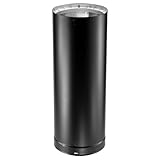
This is a standard 6-inch double-wall connector section for the run between the stove and the thimble. It suits anyone replacing a pitted or flaking piece of single-wall pipe before the season starts, or shortening a run that has gotten too long and cool. Check your stove outlet diameter and required clearances before ordering.
- 6-inch diameter, 12-inch length connector section
- Double-wall build keeps flue gases warmer over the run
Whatever you pull, wear real gloves. Old pipe is sharp at every seam and the stove is rarely as cold as you assume. A pair of heat resistant stove gloves earns its keep on cleaning day as much as on loading day.
Can you sweep the chimney yourself?
Most people can, if the chimney is straight, the roof is walkable, and the creosote is the flaky kind. You need a brush sized to your flue, enough rods to reach, a way to seal the stove opening, and a shop vac you do not mind abusing.
Work top-down or bottom-up, either is fine. Block the stove opening with plastic and tape so the soot does not end up on the couch, run the brush the full length, then clean out the base and the cleanout door. Wear a respirator, because chimney soot is nasty stuff to breathe.
Call a certified sweep when the creosote is glazed, when the chimney has offsets you cannot brush past, when you see cracked tiles or a missing liner, or when your insurance wants documentation. A sweep also catches things a brush never will, like a bad crown or a cap packed with nesting material. That last one is common around here after a summer of wasps and birds, and it is worth checking before you find a nest somewhere you did not want one.
When is the best time of year to sweep in West Virginia?
Late summer through September, which is right now. Sweeps book solid by the first cold snap in October, and calling in November means waiting through the exact stretch you wanted heat.
An end-of-season sweep in April has its own argument. Creosote is acidic, and leaving it on the liner through a humid Appalachian summer eats at masonry and steel. Spring cleaning also leaves the flue ready to go when the first frost shows up sooner than you planned.
Either way, get the first fire of the season done before you really need it. A short, hot break-in fire burns off summer dust, tells you whether the draft is working, and gives you time to fix anything that is not right.
FATOK Natural Fire Starters

Natural fire starters help you get a small fire up to temperature quickly instead of letting it smolder, which is the habit that coats a flue. They are handy for cold-start mornings when the chimney is still full of cold air and the stove wants to backdraft. Keep a jar near the stove and use one per start until the wood catches on its own.
- 150-piece pack of natural tumbleweed starters
- Helps a cold stove reach temperature fast instead of smoldering
If you are pulling together the rest of your cold-weather setup this month, the current deals page is where the seasonal gear lands.
Frequently asked questions
How often should you clean a wood stove chimney if you burn every day?
Plan on two cleanings a season. Sweep before the first fire in early fall, then inspect again around midwinter after roughly a couple of cords have gone through. Sweep at that point if the deposit measures close to an eighth of an inch.
Can you go two years without cleaning a chimney?
You can go two years without sweeping if the flue is genuinely clean, but you should still inspect it every year. NFPA 211 calls for an annual inspection regardless of use, and things like a blocked cap or a cracked tile have nothing to do with how much you burned.
Do chimney cleaning logs replace a sweep?
No. Creosote-modifying logs can make hard deposits more brittle and easier to brush out, which helps, but they do not remove anything from the flue. You still need a brush and you still need eyes on the liner.
How much creosote is dangerous?
An eighth of an inch is the accepted trigger for cleaning, and a quarter inch is enough fuel to sustain a serious chimney fire. Glazed, shiny creosote is dangerous at any thickness because it burns hot and does not brush out. Stop using the stove and call a certified sweep if you find it.
The honest version of the answer is that the calendar is a starting point and the flue is the real authority. Look at it in September, look at it again in January, and sweep when the buildup says to instead of waiting for a date.
Dry wood does more for your chimney than anything else on this list. Get the stack right, keep the fires hot instead of smothered, and most winters you will find less in the flue than you expected.
