

The short answer
- Ruby-throated hummingbirds start pulling out of West Virginia in early August. The heaviest movement runs from late August through September, and most are gone by the first week of October.
- Adult males leave first, then females, then this year’s young. Your feeder often gets busier right before it goes quiet.
- Leaving a feeder up does not keep any bird from migrating. Shortening day length drives the trip, not the sugar water on your porch.
- Leave one feeder up about two weeks past your last sighting, which usually lands somewhere in mid to late October.
- The high country empties out a week or two ahead of the Ohio Valley and the Eastern Panhandle.
Updated July 29, 2026.
What’s in this guide
- When do hummingbirds leave West Virginia?
- Why do the males vanish first?
- Does elevation change the timing across the state?
- When should you take your hummingbird feeders down?
- Will a full feeder keep hummingbirds from leaving?
- How do you help them fuel up for the trip?
- What about late stragglers and rufous hummingbirds?
- What to do with your feeders once they’re gone
- Frequently asked questions
Hummingbirds leave West Virginia over about a two month window, starting in early August and finishing up in early October. The bulk of the traffic moves through from the last week of August through the end of September, which is when most backyards see their busiest feeders of the whole year.
Ruby-throated hummingbirds are the only species that nests here in any numbers, so that is the bird we are talking about. They are headed for Mexico and Central America, and a lot of them cross the Gulf in one shot.
When do hummingbirds leave West Virginia?
The departure runs on a rolling schedule rather than a single date. Adult males start slipping south in late July and early August, once their part in nesting is done. Females and juveniles hang on through late summer, and by the last days of September most yards are down to one or two birds.
By the second week of October, sightings in West Virginia get scarce. Anything you see after that is likely a bird that nested well north of us and is passing through on its own clock.
Here is the practical version. August is when the feeder gets crowded and cranky. September is peak movement. October is stragglers.
Why do the males vanish first?
Male ruby-throats leave early because they have nothing left to do here. They do not help build the nest, sit the eggs, or feed the young, so once mating season winds down in midsummer they start putting on fat and heading south.
Females stay to raise the last brood, and the young birds need a few more weeks to fatten up before they can make the trip. That is why late August feeders look so busy. You are seeing this year’s juveniles, plus birds trickling down from Pennsylvania, New York, and Canada.
If your ruby-throated male disappeared in early August and you assumed something happened to him, he almost certainly just left ahead of the family.
Does elevation change the timing across the state?
It does, and more than people expect. Canaan Valley, the Highland Scenic Highway country, and the ridges around Snowshoe cool off and lose flowers earlier than the river valleys, so hummingbirds thin out there roughly a week or two ahead of lower elevations.
Along the Ohio River, in the Kanawha Valley, and out in the Eastern Panhandle, jewelweed and late-season garden blooms hold on longer. Those spots often keep birds into the first week of October when the highlands have already gone quiet.
The upside of that spread is that the mountains funnel migrating birds down into the valleys. A feeder in Huntington or Martinsburg can stay busy well after the high country has emptied out.
When should you take your hummingbird feeders down?
Wait two weeks past your last sighting, then take it down. For most of West Virginia that puts you somewhere between mid and late October.
The reasoning is simple. Birds coming from farther north are still working their way through in early October, and they use the same stopover yards year after year. A feeder that disappears on Labor Day pulls a fuel stop out from under a bird that has never seen your porch before.
Keeping one feeder up is plenty. You can wash and store the rest once traffic drops off, which is also about when you are hauling in tomatoes and thinking about the fall garden calendar anyway.
Will a full feeder keep hummingbirds from leaving?
No. Hummingbirds migrate on day length and internal hormonal cues, not on how easy the food is. A healthy bird will leave on schedule whether your feeder is full, empty, or in the garage.
This is one of the most stubborn pieces of backyard folklore in the state, and it does real harm. People pull feeders in early September thinking they are helping, right when migrating birds need calories most.
The rare bird that lingers into November is usually sick, injured, or a western species that took a wrong turn. Food availability is not what is holding it here.
How do you help them fuel up for the trip?
Keep the nectar simple and keep it clean. Four parts water to one part plain white sugar, no dye, no honey, no substitutes.
In August heat, sugar water goes cloudy fast. Change it every two days when temperatures sit in the eighties, and scrub the ports with a bottle brush rather than just rinsing. Black mold in the ports is far more common than most people realize.
Flowers matter as much as feeders. Jewelweed along creek banks, cardinal flower, bee balm, and late salvia all carry birds through September, so hold off on cutting back your beds until the traffic stops. If deer keep flattening your bee balm, the same stubborn clay and slope problems that make WV planting a chore also make fencing worth the trouble.
What about late stragglers and rufous hummingbirds?
Every fall a handful of western hummingbirds turn up in the eastern states, and rufous hummingbirds are the ones most often reported. They show up from October into December, sometimes at feeders that have been left up out of habit.
If you have a hummingbird in November, take photos and report it to eBird. Birders track those records closely, and a rufous or another western vagrant is a legitimate find worth documenting.
In hard cold, nectar will freeze. Swapping in a fresh feeder morning and evening keeps one available without you standing out there with a hair dryer.
What to do with your feeders once they’re gone
Scrub every hummingbird feeder with hot water and a bottle brush, let the parts dry fully, and store them somewhere dry so the gaskets do not rot. Then shift your attention to seed, because October is when chickadees, titmice, nuthatches, and juncos start showing up in numbers.
An open platform or fly-through feeder is the easiest way to make that switch, since it handles sunflower seed for a wide mix of birds without clogging in wet weather. Sheltered placement matters here more than the feeder itself, especially once wind starts coming over the ridge.
Perky-Pet Fly-Thru Feeder
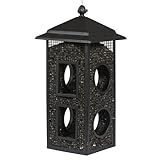
A fly-through design suits fall and winter feeding because seed dries out instead of caking, and larger birds like cardinals and jays can land on it without a fight. It is a reasonable first feeder if you are moving from nectar to seed for the season. Hang it where you can see it from a window, since that is the whole point once the porch gets cold.
- Open fly-through design keeps seed drying instead of caking
- 2 lb seed capacity suits cardinals, jays, and winter regulars
If you want to know what is really coming through your yard during migration, a camera feeder answers that better than guessing. Species identification on these is imperfect, but it catches the visitors that show up while you are at work.
Kiwibit Camera Feeder

This one runs on solar and streams to your phone, which fits a WV yard where the nearest outlet is nowhere near the good hanging spot. It suits anyone curious about the mix of birds moving through in fall and winter. Expect to correct the AI now and then on the trickier sparrows.
- Solar powered, so no outlet needed at the hanging spot
- Live 4K stream and species alerts to your phone
For heavier-duty setups built to survive squirrels and sleet, our roundup of metal feeders that hold up to cardinals and weather covers the sturdier end. You can also browse the rest of the current picks and price drops if you are stocking up before cold weather.
Late October is a good time to knock out the rest of the yard work at once. That is garlic-planting weather in most of the state, and our guide on getting cloves in the ground before the freeze lines up almost exactly with when the last hummingbird clears out. Evenings cool off enough that a fire pit on the patio starts making sense again too.
Frequently asked questions
When do hummingbirds leave West Virginia for good?
Most ruby-throated hummingbirds are out of West Virginia by the first week of October. Departures begin in early August with adult males, run heaviest from late August through September, and taper off with juveniles and northern migrants in early October. Occasional stragglers show up later in the month.
Should I take my hummingbird feeder down in September?
No. September is peak migration through West Virginia, and birds coming down from farther north depend on stopover feeders. Keep at least one feeder clean and filled until about two weeks after your last sighting, usually mid to late October.
Does leaving a feeder up stop hummingbirds from migrating?
It does not. Migration is triggered by shortening day length and hormonal changes, not by food supply. A healthy hummingbird leaves on schedule regardless of how much nectar is available.
When do hummingbirds come back to West Virginia?
The first ruby-throats usually reach the lower elevations of West Virginia in mid to late April, with higher elevations running a week or two behind. Putting feeders out in the first half of April covers the early arrivals. Migration tracking maps on eBird are the most reliable way to watch the front move north each spring.
Why did all my hummingbirds disappear in August?
Adult males leave first, often in late July and early August, so a sudden drop-off early in the month is normal. Numbers typically rebound within a couple of weeks as females, juveniles, and northern migrants move through. Late August through September is usually the busiest stretch of the year at a feeder.
The pattern is easy to remember once you have watched a few seasons of it. Quiet in early August, chaos through September, then one lonely bird in October that seems like it has no idea where it is.
Keep a feeder clean and filled through the middle of October, note the date of your last sighting, and compare it next year. Over a few seasons your own yard record beats any general map for figuring out when the hummingbirds leave your particular mountain hollow.
