
Quick takeaways
- Most West Virginia gardens should plant garlic between mid-October and early November.
- Aim for two to four weeks after your first hard frost, when soil 4 inches down reads close to 50 degrees.
- Gardens above about 3,000 feet plant earlier, in early to mid October. The river valleys and the Eastern Panhandle can wait until early or mid November.
- Hardneck garlic handles our winters best. Order seed garlic in September, before the good varieties sell out.
- Mulch with 4 to 6 inches of straw once the ground cools, then dig the heads the next late June or July.
Updated September 28, 2026.
The best time to plant garlic in West Virginia is mid-October to early November, roughly two to four weeks after the first hard frost where you live. That timing gives the cloves enough weeks to grow roots before the ground freezes, without so much warmth that they push a lot of green growth going into winter.
Where you garden in the state moves that window a few weeks either way. A garden in Canaan Valley and a garden in Point Pleasant run on different calendars, so the sections below break it down by elevation and soil temperature.
When should you plant garlic in West Virginia?
Plant garlic after your first hard frost and at least four to six weeks before the ground freezes solid. For most of the state, that lands in the second half of October. It is a good job for the same weekends you are raking leaves and stacking wood.
Garlic needs a long cold spell to form proper heads. Cloves that sit through a West Virginia winter divide into the segmented bulbs you want, while cloves that miss the chill often make one small round bulb instead.
Planting too early is the more common mistake. A warm late-September planting sends up tender leaves that get beaten up by January cold, and the plant spends spring recovering instead of building a bulb.
How does elevation change your planting date?
The higher you garden, the earlier you plant. West Virginia runs from about 240 feet at Harpers Ferry to 4,863 feet on Spruce Knob, and frost dates shift a lot across that spread.
- Mountain counties above about 3,000 feet, like Tucker and Pocahontas, plant in early to mid October.
- Middle elevations around Morgantown and Elkins plant in mid to late October.
- The Kanawha and Ohio River valleys and the Eastern Panhandle can plant in late October and into early or mid November.
Treat those as starting points. Hollows and north-facing slopes run colder than the ridge a mile away, and your own frost history tells you more than any map. If you have not kept track, your WVU Extension county office can give you local frost information.
How do you know the soil is ready?
The soil is ready when it reads about 50 degrees at 4 inches deep in the morning. An inexpensive soil thermometer settles the question in a few seconds, and it beats guessing off the air temperature during a warm October week.
If you do not have a thermometer, use the frost as your signal. Once you have had a hard frost and nights stay in the 30s and 40s, the soil is close enough.
Drainage matters as much as temperature. Garlic rots in soggy clay over winter, so if your garden sits on the heavy clay so common in this state, plant in a raised bed or a mounded row with plenty of compost worked in.
Should you plant hardneck or softneck garlic?
Hardneck garlic is the better choice for most West Virginia gardens. It handles hard winters well, peels easily, and gives you a bonus crop of scapes in early summer.
Softneck garlic stores longer and does fine in the warmer valleys, but it can struggle in the high country. Porcelain and Rocambole hardnecks are common picks in Appalachian gardens, and names like Music and German White show up in most seed catalogs.
Skip grocery store garlic for planting. Much of it is softneck grown in far warmer places, and some of it is treated to keep it from sprouting. Order seed garlic in September, because the popular varieties sell out early.
How deep and how far apart should you plant garlic?
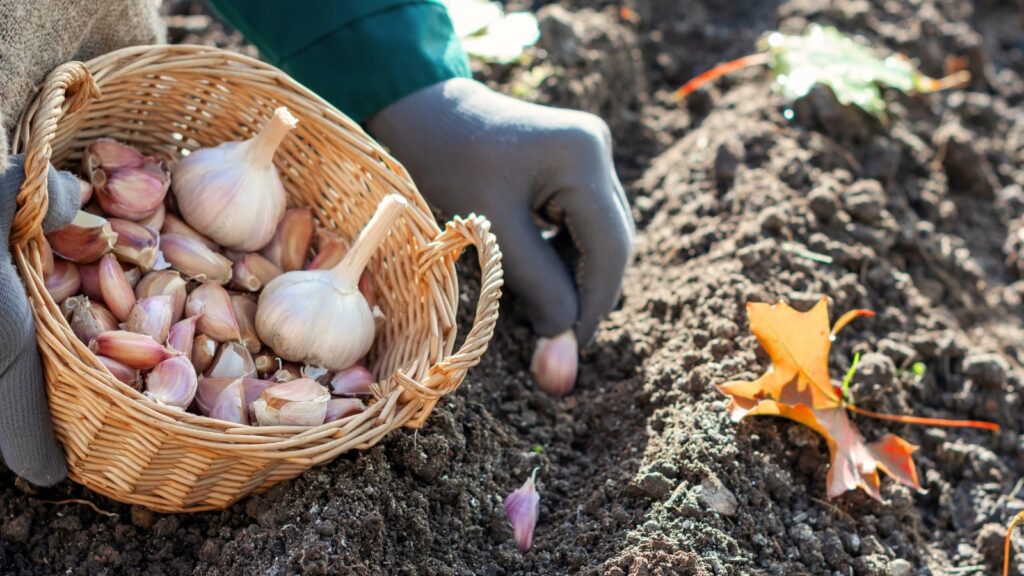
Plant each clove about 2 inches deep, pointed end up, with 6 inches between cloves and about 12 inches between rows. The flat end with the root scar goes down.
Break the heads apart no more than a day or two before planting, and leave the papery skin on each clove. Plant your biggest cloves, since big cloves grow big heads, and cook with the small ones.
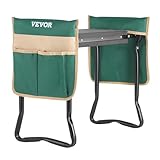
Planting a full bed means a lot of time on your knees in cold, damp dirt. A kneeler with handles makes the second and third rows much easier on your back and knees.
VEVOR Garden Kneeler and Seat
When should you mulch garlic?
Mulch garlic once the ground has cooled, usually a few weeks after planting, with 4 to 6 inches of straw. Shredded leaves work too, and most of us have plenty of those by November.
Mulch keeps soil temperature steady, which cuts down on frost heave pushing cloves out of the ground during our freeze and thaw swings. It also holds back spring weeds, and garlic does poorly when it has to compete with them.
Use straw, not hay. Hay carries seed, and you will be pulling grass out of your garlic bed all spring.
Can you plant garlic in spring in West Virginia?
You can plant garlic in early spring here, but expect smaller heads. Spring cloves miss the fall root growth and most of the cold that fall-planted garlic gets.
If you missed the fall window, plant as soon as you can work the ground in March. Some gardeners keep the cloves in the refrigerator for a few weeks first to stand in for winter.
A late planting still usually beats spring. If the ground has not frozen solid by late November or even early December in the lowlands, go ahead and get the cloves in.
When is fall-planted garlic ready to harvest?
Garlic planted in October is usually ready to dig in late June or July of the next year. Dig when the lower third or so of the leaves have turned brown and the upper leaves are still green.
Each green leaf becomes a wrapper around the bulb, so waiting until the whole plant dies back leaves you heads that split and store poorly. Snap off hardneck scapes when they curl in June, and the plant puts that energy back into the bulb.
Cure the heads with stalks attached for two to four weeks somewhere shady and airy, like a porch or a barn. After that they are ready for the kitchen, and a shelf of cookbooks for Appalachian home cooking will use them up fast.
If garlic is your first fall crop and you want to grow more of your own food next year, a good homestead skills book covers the planning, seed saving, and storage side in more depth than any one post can.
Cool Springs Press Simple Country Living

Simple Country Living: Techniques, Recipes, and Wisdom for the Garden, Kitchen, and Beyond
Simple Country Living puts garden techniques and kitchen skills in one book. It fits a gardener who just put in a garlic bed and wants a practical plan for a bigger food garden next spring.
- Covers garden techniques and kitchen skills in one book
- Practical guidance for planning a home food garden
Frequently asked questions
What month is best to plant garlic in West Virginia?
October is the best month for most of the state. Mountain gardens above about 3,000 feet should aim for early to mid October, and the river valleys and Eastern Panhandle can plant through early November.
Is it too late to plant garlic in November in West Virginia?
No, not in most of the state. If the ground is still workable and not frozen, November planting usually works fine, especially in the lower elevations. Mulch it well right after planting.
Can I plant garlic from the grocery store?
It is not a good idea. Store garlic is often a softneck type grown in warmer climates, and some is treated to slow sprouting. Seed garlic from a grower gives you varieties that handle West Virginia winters.
How long does garlic take to grow in West Virginia?
Fall-planted garlic takes about eight to nine months. Cloves planted in October are usually ready to dig in late June or July of the next year.
If you remember one thing, plant garlic after your first hard frost and get it mulched before Thanksgiving. Order seed garlic this week while the good varieties are still in stock, and the bed will mostly look after itself until the scapes show up in June.
Winter is long for a gardener with nothing growing, so a garlic bed gives you something to check on. When it is too cold to be out there, country living books make good company by the fire, and our wood stove season cookbooks have a few ways to roast a whole head. You can also browse current garden and home deals any time.
