
The short answer
- In most of West Virginia, plant tulip bulbs between mid-October and mid-November. By then nights stay in the 40s and the soil has cooled below about 60 degrees.
- Ground above roughly 3,000 feet, like Canaan Valley and the Snowshoe area, should get bulbs in during early to mid-October.
- The Ohio Valley, the Kanawha Valley and the Eastern Panhandle can plant through late November, and into December if the ground still digs.
- Set bulbs 6 to 8 inches deep with the pointed end up, in soil that drains well.
- Deer eat tulip buds, so decide how you’ll protect them before you plant.
Updated October 7, 2026
The best time to plant tulip bulbs in West Virginia is mid-October through mid-November, after the soil cools and before the ground freezes. If you’re reading this in early October, you’re right on time in the mountains and a couple of weeks early in the river valleys.
Tulips need a long cold spell before they’ll bloom, and a West Virginia winter gives them that for free. Your job is to get roots growing in cool fall soil before the freeze. Don’t plant so early that warm ground rots the bulbs or pushes up leaves too soon.
When should you plant tulip bulbs in West Virginia?
Plant between your first frost and the hard freeze. For most of West Virginia that falls between mid-October and mid-November. That gives the bulbs four to six weeks to root before winter locks up the soil.
The trees make a good signal. Once the maples on your ridge have turned and you’ve had a frost or two, it’s tulip weather.
If you keep a fall calendar, tulips come after lettuce and spinach on the list of fall garden planting dates in West Virginia. They’re about the last thing to go in the ground before Thanksgiving.
How does elevation change tulip planting time?
In this state, elevation changes your planting date more than latitude does. A garden in Pocahontas County and a garden in Huntington can be two or three weeks apart.
- High country above about 3,000 feet, like Canaan Valley, the Snowshoe area and much of Tucker, Randolph and Pocahontas counties: early to mid-October.
- Middle elevations, including the Beckley area, the Greenbrier Valley and much of central West Virginia: mid-October to early November.
- Low valleys like the Ohio River towns, Charleston, Huntington and the Eastern Panhandle around Martinsburg: late October through November.
Hollows freeze earlier than hilltops on clear nights, because cold air drains downhill and settles. If your garden sits at the bottom of a holler, go with the early end of your range.
What soil temperature do tulips need?
Tulips root best when the soil at planting depth is below about 60 degrees and nights stay in the 40s. In warmer soil the bulbs can rot in damp ground, or send up leaves that a hard freeze will burn.
A simple soil thermometer pushed 6 inches down takes away the guessing. Check it in the morning for a few days in a row, because one cold snap doesn’t mean the ground has cooled.
Garlic follows almost the same rule. If you’re planting garlic in West Virginia this month, you can put both in the same weekend.
How deep should you plant tulip bulbs?
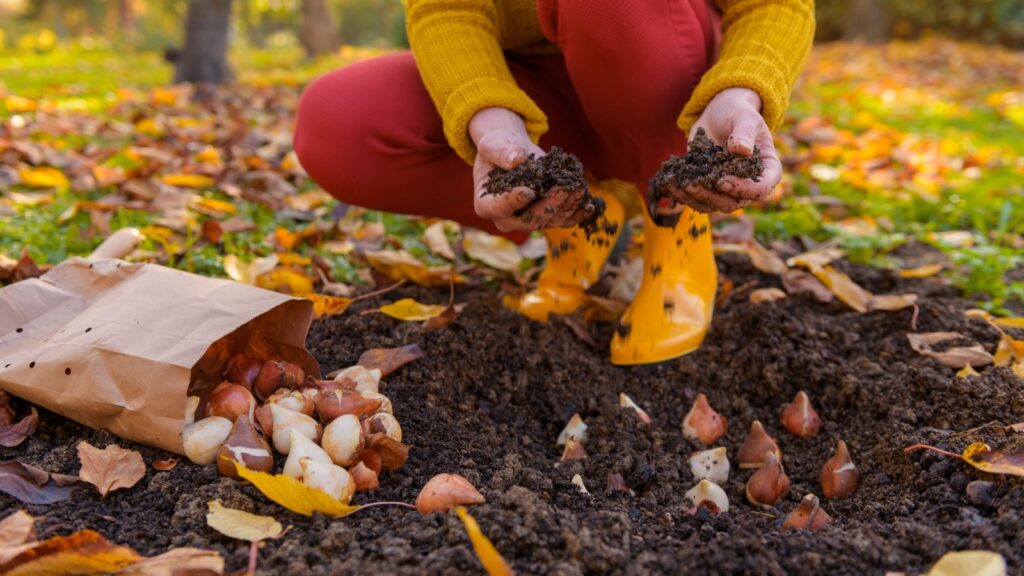
Plant tulip bulbs 6 to 8 inches deep, measured to the bottom of the bulb, with the pointed end up. A rough rule is three times the height of the bulb.
Space them about 4 to 6 inches apart. A clump of a dozen looks better in April than a single row of soldiers.
Here, drainage matters more than depth. A lot of West Virginia ground is heavy clay that stays wet all winter, and a tulip sitting in a soggy hole will rot by March.
Work compost into the bed, or plant on a slope or in a raised bed. Skip the low spot where water stands after a rain. Water once after planting to settle the soil, then let fall rain take over.
Is it too late to plant tulips in November or December?
It’s not too late if you can still get a shovel into the ground. Bulbs planted in late November or even December usually bloom, just a bit later and sometimes on shorter stems.
Don’t hold bulbs over until spring. A tulip bulb in a paper bag in the garage dries out and misses the cold it needs, so planting late always beats not planting.
Garden centers mark bulbs down this time of year, and the bargains can be good. Squeeze each bulb before you buy, and pass on any that feel soft or show mold.
How do you keep deer and squirrels off tulips?
Deer are the biggest threat to tulips in West Virginia, and they’ll eat a bed down to stubs the week the buds show. Squirrels and voles go after the bulbs themselves in fall and winter.
For squirrels, lay chicken wire or hardware cloth over the bed after planting and cover it with mulch. The leaves grow up through the openings in spring. For voles, a handful of sharp gravel in each planting hole helps.
For deer, use a fence or spray repellent once the leaves come up. Plenty of people in deer country plant tulips close to the house and ring them with daffodils, because deer and rodents leave daffodils alone.
Fall cleanup usually leaves a brush pile behind. Before you put a match to it, read up on when you can burn brush in West Virginia, because fall burning has its own hours.
Will tulips come back every year in West Virginia?
Most garden tulips put on a strong show the first spring and come back weaker after that. That’s true here and everywhere else, because hybrid tulips are bred for one big season.
Darwin hybrids and species tulips come back more reliably, especially in sunny spots that drain well. Let the leaves yellow all the way before you cut them back, because that’s how the bulb stores energy for next year.
Plenty of gardeners treat tulips as annuals and replant every fall. That’s a fine way to do it, and nobody should feel bad about it.
Frequently asked questions
Can I plant tulip bulbs in September in West Virginia?
For most of the state, September is too early, because the soil is still warm. Even at high elevations, wait until October. Until then, keep the bulbs in a cool, dry spot away from apples, which give off a gas that can damage them.
Do tulip bulbs need to be chilled in the refrigerator before planting in West Virginia?
No. A West Virginia winter gives tulips plenty of cold right in the ground. Chilling bulbs in the refrigerator is for warm places like Texas and Florida.
Should I water tulip bulbs after planting?
Water them well once, to settle the soil around the bulbs. After that, fall rain is usually enough. Watering more just keeps clay soil too wet.
Can I grow tulips in pots in West Virginia?
Yes, but soil in a pot freezes harder than soil in the ground. Use a large container, and once it’s planted, keep it against the house or in an unheated garage for the winter. Bring it out into the sun when the shoots show in early spring.
Should I mulch tulip beds for winter?
Yes, add 2 to 3 inches of shredded leaves or bark once the ground has cooled. Mulch keeps the soil temperature steady, which matters most in the valleys, where freezing and thawing can push bulbs up. Pull it back a little in spring when the shoots come through.
If you want a single date for the calendar, make it the first weekend after your first good frost. That’s right in most years, whether you live on a ridge or by the river.
While you’re out with the shovel, look over your other winter tools too. Get the loppers ready for pruning apple trees before late winter. If anything needs replacing, our current deals page is a good place to start.
