
Quick takeaways
- Firewood is seasoned when a meter reads 20% moisture or less on a freshly split inside face.
- Without a meter, look at weight and sound. Dry wood feels light for its size and gives a sharp, hollow crack when you knock two splits together, while wet wood thuds.
- End cracks and loose bark are hints, not proof. Wood can crack on the outside and still be wet in the middle.
- Most split hardwood needs six months to a year to season. Oak usually needs closer to two years.
- If a split hisses, bubbles at the ends or won’t stay lit, it isn’t ready.
In this guide
- What is the most reliable way to tell if firewood is seasoned?
- How can you tell if firewood is seasoned without a meter?
- Is there a test you can do in the stove?
- How do you tell if oak firewood is seasoned?
- How long does firewood take to season in West Virginia?
- What happens if you burn firewood that isn’t seasoned?
- How do you check firewood you bought as seasoned?
- Frequently asked questions
To tell if firewood is seasoned, split a piece and test the fresh inside face with a moisture meter. A reading of 20% or lower means it’s ready to burn. If you don’t have a meter, seasoned wood feels light for its size, looks gray and faded on the ends, and makes a sharp crack when you knock two splits together, while wet wood thuds.
That’s the short version. Below, I go through each test one at a time and explain why oak and our humid summers both slow things down.
Updated October 19, 2026. People all over the state are lighting their first fires this month, so check your stack now and not in January.
What is the most reliable way to tell if firewood is seasoned?
The most reliable test is a moisture meter on a freshly split face, and anything at 20% or under is seasoned. The EPA’s Burn Wise program uses that same 20% line, and so do most stove manufacturers.
Where you test makes all the difference. The outside of a split dries first, so a reading on the surface or the end grain can say 15% while the core is still at 30%. Pull a piece from the middle of the stack, split it again, and press the pins into the new face near the center.
Test three or four pieces from different spots in the pile, not just the top row that gets all the sun. Most pin meters read a little low on cold wood, so on a frosty morning, bring a split inside for an hour before you test it.
Meters are cheap and they take the guessing out of it. If you heat with wood all winter, keep one on the shelf next to the stove gloves, and our current deals on home and outdoor gear are a good place to watch for one this fall.
How can you tell if firewood is seasoned without a meter?
Use several signs together, because no single one proves anything. The more of these you see in the same piece, the more you can trust it.
- Pick up a split and judge it against its size. Fresh-cut hardwood carries a lot of water, often a third or more of its weight, so seasoned pieces feel lighter than they look.
- Knock two pieces together. Seasoned wood makes a sharp, hollow crack like a bat hitting a ball, and wet wood gives a dull thud.
- Look at the ends. Dry wood fades from cream, tan or pink toward gray, and it usually shows cracks running out from the center like wheel spokes.
- Check the bark. On seasoned wood it often loosens and peels off by hand, though some species hold their bark tight no matter how dry they get.
- Smell a fresh split. Green wood smells sappy or sour, and seasoned wood has a faint, dusty smell.
- Feel the split face with the back of your hand. Wet wood feels cool and a little clammy, and dry wood feels like it’s room temperature.
The cracks come with a warning. End checks start forming within weeks of cutting, long before the inside is dry, so a cracked end tells you less than most people think.
Is there a test you can do in the stove?
Yes. Put a split on a hot fire and watch it, because wet firewood hisses, sizzles and sometimes pushes bubbling water out of the ends. It’s also slow to catch and smokes more, and the fire sulks unless you keep feeding it kindling.
Seasoned wood catches within a few minutes, burns with bright flames, and chars evenly across the surface. If one piece out of a load sizzles, the rest of that row probably needs more time.
The soap test works well on open-grained wood. Brush dish soap on one end of a split and blow hard into the other end, and if bubbles form, air is moving through dry pores. It works on red oak and ash but not on white oak, because white oak’s pores are plugged with growths called tyloses, the same reason it holds whiskey in a barrel.
How do you tell if oak firewood is seasoned?
Oak is seasoned when a fresh split reads 20% or under, and for most oak that takes about two years after splitting. It’s dense, it holds water, and it looks dry on the outside long before it is.
The ends of seasoned oak turn from pinkish or tan to a weathered gray, with deep checks running toward the center. A fresh split of green red oak smells sharp and sour, almost like vinegar, and that smell fades as the wood dries.
Oak is heavy even when it’s dry, so the weight test doesn’t help much here. Rely on the meter or the knock test, and don’t trust oak that was cut last winter, whatever the seller tells you. For another dense hardwood that throws serious heat, see our breakdown of whether black locust is good for firewood.
How long does firewood take to season in West Virginia?
Here, most split hardwoods take six months to a year to season, and oak takes a year and a half to two. Lighter hardwoods like tulip poplar and red maple dry faster.
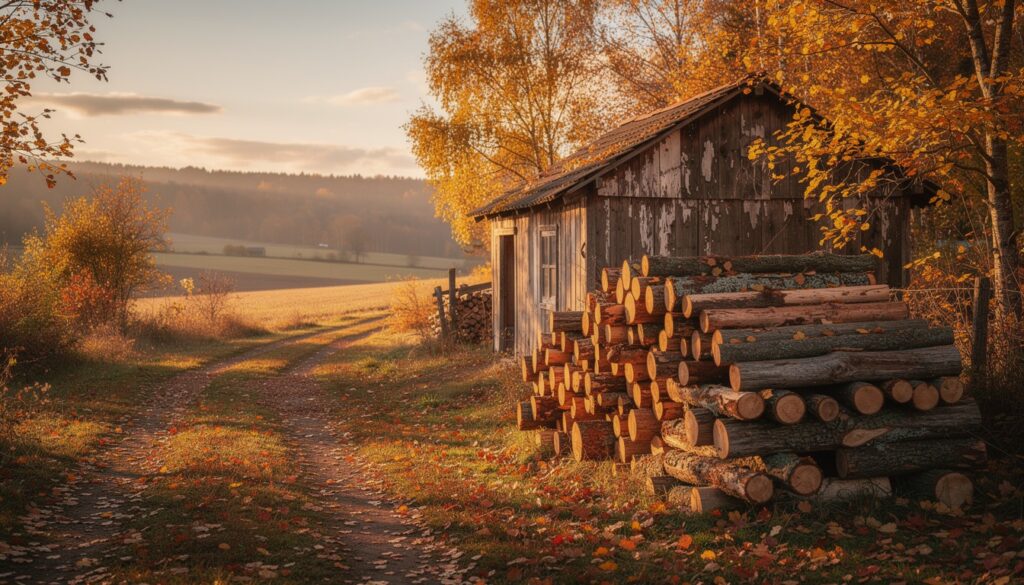
Drying wood is harder in West Virginia than in drier states. Our summers are humid, and a stack in a shaded hollow or on the north side of a ridge may barely dry at all in one season.
These habits speed it up:
- Split the wood first. Bark slows drying, so unsplit rounds can stay wet in the center for years.
- Stack it off the ground on pallets or rails so the bottom row doesn’t soak up moisture.
- Pick a spot with sun and wind, and leave a few inches between rows.
- Cover only the top. A tarp over the sides traps humidity, and the wood ends up steaming instead of drying.
Light, fast-growing woods dry quickly but burn out quickly too, a trade-off we cover in our take on burning tree of heaven. Wherever you stack, keep the pile away from the house. A woodpile against the wall invites rodents, which is why it comes up in our guide to keeping mice out of a cabin in winter.
What happens if you burn firewood that isn’t seasoned?
Burning wet firewood wastes heat and builds up creosote in your chimney fast. The fire spends its energy boiling water out of the wood, so the stove runs cooler and the smoke condenses into tar on the cool flue walls.
That creosote is what causes chimney fires. Wet wood is also behind a lot of smoky stove complaints, like the one we cover in why a wood stove smokes when you open the door.
A few pieces in the mid-20s mixed into a hot fire with dry wood won’t hurt anything. A whole winter of it will, so if most of your pile is wet, buy some dry wood for this year and let your own pile sit.
How do you check firewood you bought as seasoned?
Before you stack a load you bought, split one piece and test the inside. “Seasoned” on a firewood ad means different things to different sellers, and plenty of it was cut last spring.
Ask when the wood was cut and when it was split, not just whether it’s seasoned. A seller who says “cut two winters ago, split last spring” is giving you something you can check, and a seller who only says “it’s seasoned” isn’t.
If the load turns out wet, you haven’t wasted your money, you’ve just bought next year’s wood early. Stack it properly and get a smaller load of kiln-dried wood for this winter. If you’re hauling wood across county lines, check the West Virginia Department of Agriculture’s firewood rules first, because pests like the emerald ash borer travel in it.
Frequently asked questions
What moisture content should seasoned firewood be?
Seasoned firewood should read 20% moisture or less, measured on a freshly split inside face. Somewhere between 15% and 20% is the sweet spot for most wood stoves. Readings taken on the outside of a split or on the end grain will come out too low.
Can firewood season in six months?
Lighter hardwoods like poplar and maple can season in about six months if you split them, stack them off the ground, and leave them in sun and wind through a summer. Oak and other dense hardwoods won’t be ready that fast. Use a meter to confirm instead of going by the calendar.
Does firewood season faster split or unsplit?
Split firewood seasons much faster. Bark slows the loss of moisture, so unsplit rounds can stay wet in the center for years. Split your wood as soon as you can after cutting it.
Should you cover firewood while it seasons?
Cover the top of the stack and leave the sides open. A roof or a strip of metal on top keeps rain off, and open sides let the wind carry moisture away. A tarp over the whole stack traps humidity and slows drying.
Can firewood be too dry?
Very dry wood, like some kiln-dried bundles, burns hot and fast, so load the stove lighter and watch it at first. The bigger risk with wood that has sat too long is rot from poor storage, not dryness. Punky, soft wood gives very little heat, whatever the meter reads.
If you only do one thing this week, pull a piece from the middle of your stack, split it, and test it. That one split tells you more than looking at the whole pile from the porch.
If the answer is “not yet,” that’s fine. Start next year’s pile now in a spot where the sun and wind can reach it, and by next October you’ll be burning dry wood while the Mountaineers are on.
