
Takeaways
- Plant garlic in West Virginia from mid-October to mid-November, about two weeks after your first frost.
- High mountain gardens should plant in early to mid-October. The Ohio Valley, Kanawha Valley and Eastern Panhandle can wait until late October or into November.
- Aim for soil around 50 degrees at four inches deep, with four to six weeks left before the ground freezes hard.
- Hardneck garlic handles WV winters better than softneck.
- Mulch with 4 to 6 inches of straw and expect to harvest in late June or July.
Plant garlic in West Virginia between mid-October and mid-November, roughly two weeks after the first frost and four to six weeks before the ground freezes hard. In the high country that window opens and closes earlier, so folks in Tucker or Pocahontas County should be planting now. Updated October 16, 2026.
Garlic needs a fall start because it needs a long cold spell to split into a proper bulb. The cloves grow roots before winter, sit quiet under mulch through January, and take off when the soil warms in March.
Table of contents
- When should you plant garlic in West Virginia?
- How does elevation change the planting date?
- How do you know the soil is ready?
- Hardneck or softneck: which grows better here?
- How do you plant garlic cloves?
- Should you mulch garlic over winter?
- What if you miss the planting window?
- When is fall-planted garlic ready to harvest?
- Frequently asked questions
When should you plant garlic in West Virginia?
For most of West Virginia, the best time to plant garlic is the last two weeks of October through the first week or two of November. That gives the cloves enough warm soil to grow roots, but not enough to push up a lot of green growth before winter. A little green poking through the mulch in December is fine, so don’t panic if you see it.
Go by your soil, not by a date on the calendar. A warm fall pushes the window later, and an early cold snap in the mountains pulls it earlier.
How does elevation change the planting date?
Elevation moves the planting date more than anything else in this state. Hardiness zones here run from zone 5 on the highest ridges to zone 7 in the warmest river valleys, which is a big spread for a state this size.
| Region | Examples | Typical planting window |
|---|---|---|
| High mountains (roughly 3,000 feet and up) | Canaan Valley, Snowshoe, the Spruce Knob area, high ground in Tucker, Randolph and Pocahontas | Early to mid-October |
| Middle elevations and plateaus | Morgantown, Beckley, Lewisburg, Buckhannon, Elkins | Mid to late October |
| Lowlands and river valleys | Charleston, Huntington, Parkersburg, Wheeling, Martinsburg | Late October to mid-November |
Hollows play by their own rules. Cold air pools at the bottom of a hollow, and it can frost there two weeks before the ridge above it. Plant by what your own yard does, not by the nearest town.
How do you know the soil is ready?
Your soil is ready when it reads about 50 degrees at four inches deep, which usually means a couple of light frosts have already come and gone. A soil thermometer answers the question if you check it in the morning, before the sun warms the ground. If you don’t have one, use frost as your cue, and our guide to first frost dates across West Virginia has the typical timing by region.
The hard freeze is the other end of the window. Cloves need about four to six weeks of root growth before the ground locks up, so don’t push planting into December in the mountains.
Hardneck or softneck: which grows better here?
Hardneck garlic is the better choice for most West Virginia gardens. It handles cold winters well and makes big cloves that peel easily. Porcelain types like Music and German White are common picks in the region.
Softneck garlic keeps longer in storage and you can braid it, and it can do fine in the warmer lowlands. In the mountains it has a harder time getting through a rough winter.
Buy seed garlic from a grower or a garden center, not from the grocery store. Grocery garlic is often a softneck grown in a mild climate, and some of it is treated so it won’t sprout.
How do you plant garlic cloves?
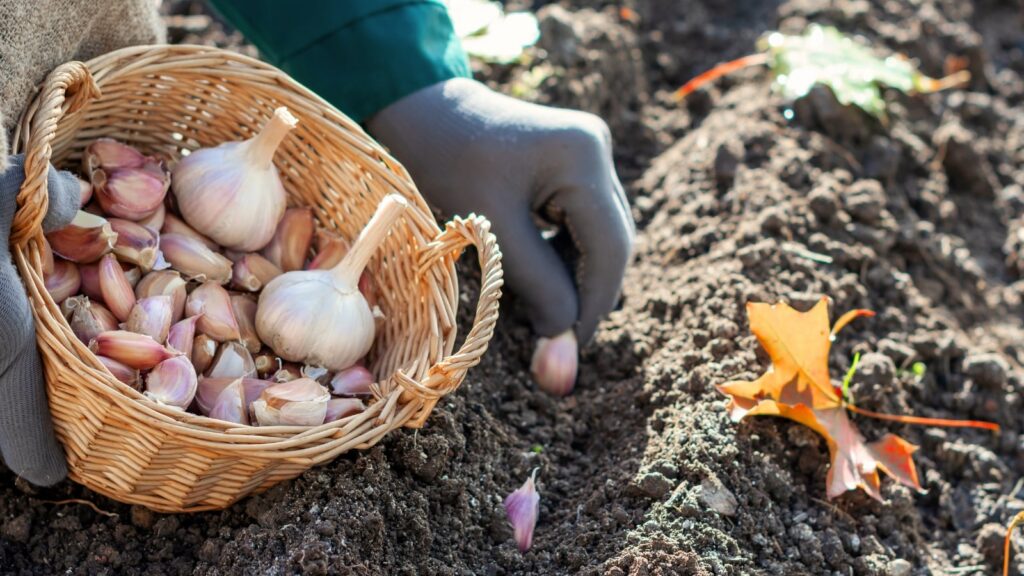
Plant each clove pointed end up, about two inches deep and six inches apart, in rows a foot apart. Break the bulbs apart a day or two before planting and leave the papery skins on. Save the biggest cloves for planting, because big cloves grow big bulbs.
Drainage matters more than anything you mix into the soil. Plenty of WV ground is heavy clay that holds water all winter, and garlic sitting in a wet hole will rot. A raised bed, or a mounded row with some compost worked in, fixes most of that.
Garlic likes soil close to neutral, around 6 to 7 on the pH scale. WVU Extension offers soil testing, and a test tells you whether you need lime so you don’t have to guess.
One fall warning before you dig a new bed. Ground nests are at their biggest right now, so look the spot over first, and here’s how to handle a yellow jacket nest in the ground if you find one.
Should you mulch garlic over winter?
Yes, cover garlic with 4 to 6 inches of clean straw after planting. Our winters swing back and forth between freezing and thawing, and that cycle can heave cloves right up out of the ground. Straw keeps the soil temperature steadier and holds back weeds in spring.
Skip hay if you can, because it’s full of seeds. Shredded leaves work too, though they pack down tighter than straw.
Some folks scatter wood stove ash on the garlic bed. A light dusting adds potassium and raises pH, so leave it off if your soil test already reads neutral or higher. Only use ash from plain firewood, and wood that went through proper seasoning before winter burns cleaner and leaves better ash.
Late fall is when a lot of us are cleaning out the stove and chimney anyway, so the ash bucket is already sitting there. Let the ashes cool completely in a metal can before they go anywhere near straw.
What if you miss the planting window?
If you miss the window, plant anyway as long as you can still work the ground. Lowland gardeners can often plant into early December and still get a crop, just with somewhat smaller bulbs. Planting in spring is the last resort, and it usually gives small bulbs, some of which never split into cloves.
When is fall-planted garlic ready to harvest?
Garlic planted in fall is ready to harvest from late June to mid-July, once the lower three or four leaves have turned brown. Each green leaf left on the plant lines up with a protective wrapper on the bulb, so if you dig too late the bulbs split and don’t store well. Dig one test bulb before you pull the whole row.
Hardnecks send up curly scapes in early to mid-June. Cut them once they curl so the plant puts its energy back into the bulb. They’re good sauteed or blended into pesto.
After digging, cure the bulbs for two to three weeks in a dry, shady spot with good airflow, like a porch or a barn. Trim the roots and stalks once they’ve dried down.
EWPJDK Garden Pruning Shears 3 Pack

Garlic needs a pair of shears twice in summer: once to cut scapes in June and again to trim roots and stalks after curing. A three-pack lets you keep one in the garden shed and one wherever the garlic hangs to dry.
- Three stainless steel shears in one pack
- Small enough to cut garlic scapes and trim cured bulbs
Frequently asked questions
Can I plant garlic from the grocery store?
You can, but it’s a gamble. A lot of grocery store garlic is softneck grown in mild climates, and some is treated so it won’t sprout. Seed garlic from a regional grower is a much safer bet for West Virginia winters.
Is November too late to plant garlic in West Virginia?
Not in most of the state. The lowlands and river valleys are usually fine through mid-November, and sometimes later. In the high mountains, November planting is risky because the ground can freeze before the roots get established.
How deep should garlic be planted?
Plant about two inches deep, measured from the tip of the clove to the soil surface, with the pointed end up. In mountain gardens with hard winters, some growers go closer to three inches and then add a thick layer of straw on top.
Does garlic need water over the winter?
Usually not. Fall rain and snowmelt keep the soil moist enough here. Water at planting time if the ground is dry, check moisture again in spring when growth picks up, and stop watering a couple of weeks before harvest.
If you’re reading this in mid-October, you’re right on time almost anywhere in the state, and mountain gardeners should get their cloves in this week or next. Loosen the bed so it drains, plant the big cloves and pile on the straw.
After that, leave it alone until the scapes come up in June. Garlic is about the easiest thing you’ll grow all year, and if you need a few tools before then, our garden and tool deals page is worth a look.
