
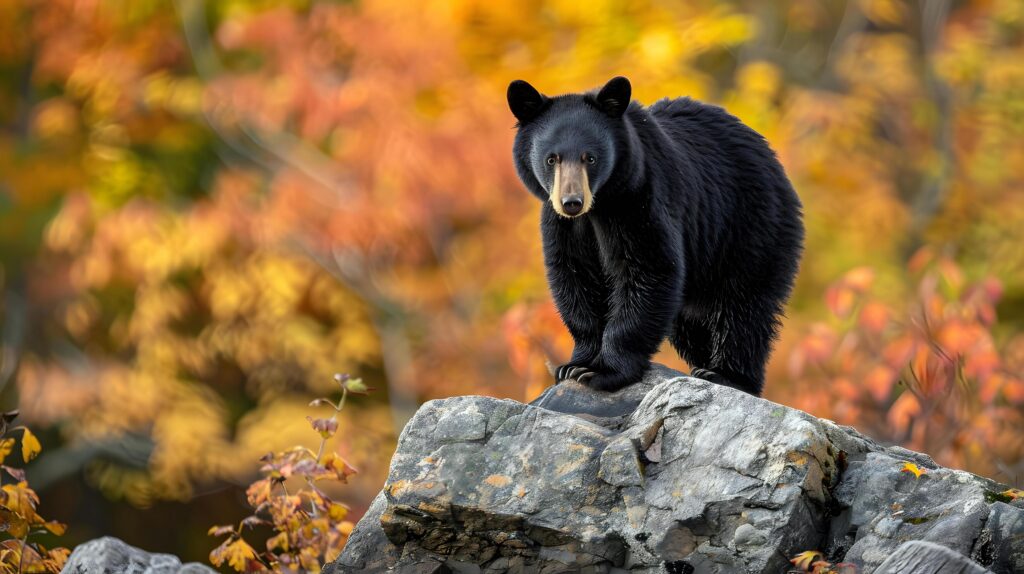
Key Takeaways
- Most West Virginia black bears go into dens between late November and the end of December.
- Pregnant females den first, often by Thanksgiving. Adult males den last, and some stay up into January.
- Bears usually leave their dens in March or April. Sows with new cubs come out last.
- A poor acorn and beechnut crop sends bears to bed earlier. A big crop keeps them out longer.
- Bears here go into a light winter sleep and can wake up, so a warm spell in January can bring one out.
Updated October 2, 2026.
Black bears in West Virginia usually go into their dens between late November and the end of December, and most come back out in March or April. The exact week depends on the bear and on how much food the woods put out that fall.
That means October is the hungriest, busiest month of the bear year. If you have a cabin, a deer stand, or a bird feeder anywhere in the mountain counties, this is when bears are most likely to show up.
In this guide
When do black bears go into dens in West Virginia?
Most bears in West Virginia den sometime between late November and late December. There is no single date, and the spread between the first bear and the last one can be more than a month.
Pregnant females go first. They need the den for giving birth, so many are tucked in by Thanksgiving or soon after. Females with yearlings follow, and the big males hold out the longest, sometimes into January if food is still around.
Before any of that, bears spend fall in a feeding push biologists call hyperphagia. A bear may eat for most of the day and night in October, trying to pack on the fat it will live on all winter.
Do West Virginia bears truly hibernate?
Not in the deep, hard-to-wake way a groundhog does, but close enough that most people call it hibernation. A black bear’s body temperature only drops several degrees, while its heart rate and breathing slow way down.
The impressive part is what a denned bear doesn’t do. It can go months without eating, drinking, or going to the bathroom, recycling its own waste and burning stored fat.
Because the sleep is light, a bear can wake up if something disturbs the den or if a warm stretch rolls through. That’s why you’ll hear about a bear on a trail camera in February, and it’s nothing to panic about.
What makes a bear den early or late?
Food matters most. Bears den when eating stops being worth the effort, so the size of the fall mast crop sets the schedule more than the calendar does.
Hard mast is the big one here: acorns, hickory nuts, and beechnuts. In a bust year, bears run out of easy food and many head to the den earlier. In a heavy acorn year, they can stay out well into December because there is still plenty to eat on the ground.
The WV DNR publishes a mast survey each fall that tells you how the oaks and other trees did across the state. If you want a decent guess at how late bears will be moving where you live, that report is the place to start.
Elevation and weather play a smaller part. Bears up in the high Allegheny counties tend to face snow sooner than bears in the lower western hills, and a hard early cold snap can nudge them along.
Where do bears den in West Virginia?
Bears den almost anywhere they can get out of the wind and stay hidden. Rock ledges and crevices are common in the mountain counties, and so are hollow trees, root wads from blown-down trees, and thick brush piles.
Some bears den right on the ground in a dense laurel or rhododendron thicket, with little more than a bed of leaves. Females giving birth tend to pick more protected spots.
Every so often, a bear chooses something people built. Crawl spaces, the space under a porch or deck, and the inside of a quiet outbuilding all get used, which is one more reason to close up the gaps before you leave a cabin for the winter.
When do bears come out of their dens in the spring?
Most West Virginia bears leave their dens in March or April. Males tend to come out first, and sows with new cubs come out last, often in April or even early May.
Cubs are born in the den in January or February, small enough to fit in your hand. Mom nurses them through the rest of winter, and they need time to get big enough to follow her around before she leaves.
A bear just out of the den is thin and hungry, and spring food is scarce until green-up. That’s when bird feeders and garbage cans start getting raided again. Spring at a cabin also means checking for water, and if the thaw left the basement soggy, our guide to wet dry vacs that can clear a flooded basement covers what’s worth having on hand.
What should cabin owners and hunters do this fall?
Take away the easy food until the bears are denned, which in most of West Virginia means into December. A bear in fall feeding mode will check anything that smells like calories.
Bird feeders are the most common problem. Bring them in during bear season, because seed is pure fat and a bear will tear down a pole to get it. Keep trash inside a locked shed or garage until pickup day, and clean the grill after every cookout.
Feeding bears on purpose is against the law in West Virginia, and the DNR has guidance on living with bears if you want the specifics. The short version is that a fed bear becomes a problem bear, and problem bears rarely end well.
At hunting camp, the same rules apply. Keep coolers and food closed up in a vehicle or hard-sided building, and if you’re still deciding what to bring, our rundown of camp cooking gear that earns its space leans toward stuff that’s easy to clean and pack away at night.
If you plan to hunt bears yourself, season dates and rules change every year, so check the current WV DNR hunting regulations before you go. Late seasons in December make sense partly because so many males are still up and moving.
Petersen's Hunting Guide to Big Game

For a hunter getting into bears, this book covers how bears and other big game move and feed through the seasons. It’s general reading, not West Virginia regulations, so pair it with the DNR’s rules for the current year.
- Covers bear, deer, and elk hunting
- Explains seasonal movement and feeding habits
Cabin owners closing up for the season should walk the foundation and block any open crawl space vents or gaps under porches. While you’re doing fall chores, it’s also a good time to get bulbs and cloves in the ground, and our post on planting garlic in West Virginia covers the timing for that. If you’re staying through the winter and running the stove hard, here’s what to look for in an air purifier that handles wood stove smoke.
For more gear picks around cabin and camp, you can browse the Cozy In WV deals hub.
Frequently asked questions
Can bears come out of their dens in the middle of winter in West Virginia?
Yes. Black bears sleep lightly and can wake if a den gets disturbed or a warm spell comes through. Some males in a good mast year never fully settle in until January. A winter bear sighting is unusual but not cause for alarm.
Are bears more dangerous in the fall?
Bears are more active and more focused on food in the fall, which brings them closer to houses and camps. That raises the odds of a run-in, not the odds of an attack. Black bears are generally shy, and most trouble starts with food left out where they can reach it.
When are bear cubs born in West Virginia?
Cubs are born in the den in January or February. They are tiny at birth and nurse while the mother stays denned. The family usually comes out in April or early May, later than most other bears.
When should I take my bird feeders down in West Virginia?
Bring them in during the months bears are active, and leave them down until bears have denned, usually sometime in December. Put them back away again in early spring when bears come out hungry. The WV DNR has current guidance on feeders and other bear attractants.
So if you’re asking because you’ve got a cabin to close up or a stand to hang, plan on bears being out and hungry through November, and in a good acorn year, deep into December. Treat the woods as bear country until the snow is sticking and the DNR’s mast report says the food has run out.
Get the feeders in, latch the trash, and close up that crawl space. Then you can enjoy the rest of fall without a surprise visitor on the farmhouse Halloween porch decor that lasts into November.
