
The short answer
- In West Virginia, pawpaws ripen from late August into early October. Most of the crop comes in during mid to late September.
- Pawpaws in the low river valleys ripen first. Patches in the mountain counties run about a week or two behind.
- A ripe pawpaw gives when you squeeze it gently and has a strong sweet smell. It also comes off the branch with a light tug.
- Ripe fruit keeps two or three days on the counter and about a week in the fridge. Freeze the pulp if you need it to last longer.
Updated September 21, 2026.
In West Virginia, pawpaws ripen from late August into early October, and most wild patches hit their peak in the middle two weeks of September. If you’re reading this in late September, the answer is probably yes, so go check your spot.
Each patch only produces for two or three weeks. Once the first fruit hits the ground, check back every few days, or the raccoons and possums will beat you to it.
In this guide
When are pawpaws ripe in West Virginia?
September is pawpaw month in West Virginia. In warm, low spots, trees can start dropping fruit in the last week of August, and a few late trees still have fruit in the first week of October. The timing moves by a week or so from year to year, depending on how hot the summer was.
Trees in the same creek bottom don’t all ripen together. Pawpaw trees grow from seed as well as from root suckers, so a patch can have a few early trees, a big middle group, and some stragglers. That spread is why one patch can give you fruit for most of a month.
Frost ends the season. By the time the first frost reaches West Virginia in most of the lower counties, the trees have usually dropped their fruit. A hard freeze turns any fruit still on the branches to mush.
Does elevation change when pawpaws ripen?
Yes, pawpaws at lower elevations ripen earlier. Patches along the Ohio River, the Kanawha, and the lower parts of other big river valleys get the most summer heat, so they usually ripen first. Higher up, fruit comes in later, and pawpaws grow less often there because the trees like warmer hollows.
The elevation pattern is the same one behind peak fall foliage by elevation, only reversed. Leaves change color first up high, and pawpaws ripen first down low. If your Kanawha County patch is done, a patch a couple thousand feet higher might still be a week away.
How can you tell when a pawpaw is ripe?
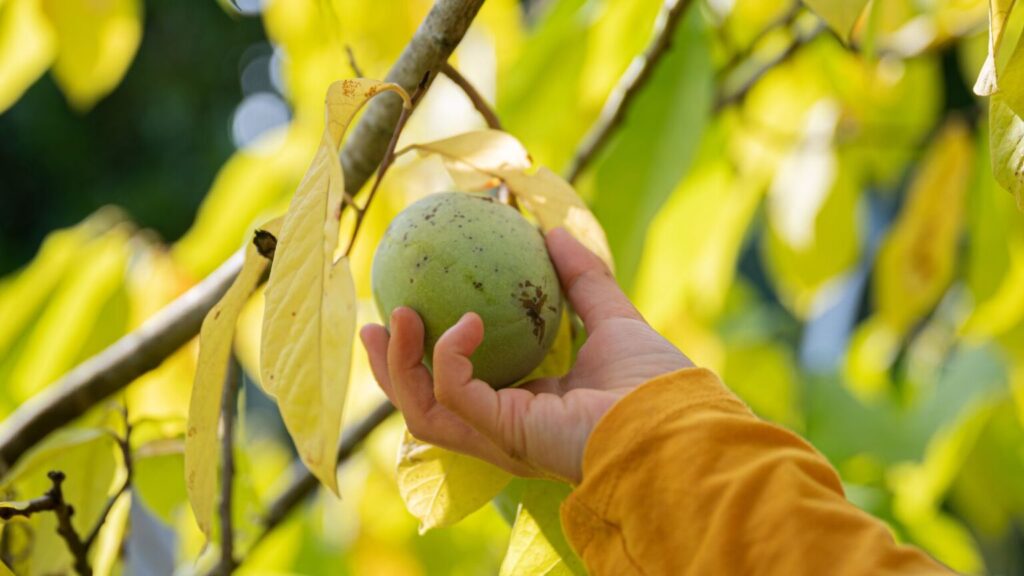
A ripe pawpaw gives when you press it with your thumb, about like a ripe peach, and it has a sweet, fruity smell. On a warm afternoon, you can often smell a patch with ripe fruit before you can see the fruit.
Don’t go by color. A lot of wild pawpaws are still green when they’re ripe, though some turn a lighter yellow-green or get dark flecks on the skin, and both are fine. If the skin is black all over or the fruit smells like it’s fermenting, it’s past eating.
The best test is a gentle tug. Hold a cluster and lift it a little: ripe fruit comes off easily, and unripe fruit stays put. Many people shake the trunk lightly and pick up what drops, and fresh fruit under a tree means the rest of that tree is close.
Will pawpaws ripen after you pick them?
Pawpaws picked when they’re nearly ripe will finish softening on the counter in a day or two. Hard green fruit picked early almost never ripens well. It usually stays bland or goes brown inside without ever getting sweet.
Pick fruit that’s full size and just starting to soften, or fruit that comes off with a light tug. If a pawpaw won’t come loose, leave it on the tree and check again in a few days.
How long do ripe pawpaws last?
A fully ripe pawpaw keeps about two to three days at room temperature. In the refrigerator, ripe fruit keeps about a week. Fruit picked just short of ripe keeps a little longer in the fridge and will finish ripening on the counter when you take it out.
That short shelf life is why grocery stores almost never sell pawpaws. For longer storage, scoop out the pulp, pick out the seeds, and freeze it. If you do a lot of preserving, one of the homestead skills books worth keeping on the shelf is handy for freezing and canning timelines.
Where do pawpaws grow in West Virginia?
Pawpaws grow wild in most of West Virginia, mostly in moist, shady creek bottoms and on lower slopes under taller hardwoods. They spread from their roots, so where you find one tree, you’ll usually find a patch. Look for big, drooping leaves that look almost tropical next to the oaks and maples.
Get permission before you pick on private land. Public land has its own rules, and state parks don’t all follow the same rules as state forests or wildlife management areas. Before you gather fruit, check with the WV DNR or the office that manages the property.
Pawpaws come in at a busy time of year for anyone with a garden. Late September is also a good time to start planning your beds for planting garlic in West Virginia, so you can do the fruit run and the bed prep on the same weekend.
Frequently asked questions
Can you eat pawpaw skin and seeds?
No. The skin tastes bitter, and the seeds contain compounds that can upset your stomach. Scoop out the flesh and throw away the big seeds. A few people get stomach trouble from the fruit itself, so eat a small amount the first time.
What does a pawpaw taste like?
Most people say it tastes like banana and mango together, with a texture like custard. Wild trees vary a lot. One tree can taste flat or a little bitter while the tree next to it tastes excellent.
Does frost ruin pawpaws?
A hard frost damages any fruit still on the tree and ends the season. In most years, West Virginia pawpaws have ripened and dropped before the first hard frost. Patches at higher elevations and years with a late season have the most risk.
Can you freeze pawpaws?
Yes, but freeze the pulp instead of the whole fruit. Scoop out the flesh, pick out the seeds, and pack it into freezer bags or containers. Use the frozen pulp for baking, smoothies, or ice cream, because it won’t have the same texture as fresh fruit.
What should you do this week?
If you know of a creek bottom patch, go look this week, because mid to late September is peak season in most of the state. Take a shallow basket or a soft bag. Ripe pawpaws bruise when you stack them deep.
Eat the best ones standing under the tree, take the rest home, and freeze whatever you can’t eat in a couple of days. For more fall guides and seasonal finds, see our Cozy In WV deals hub.
