
Key takeaways
- Most firewood needs 6 to 12 months of seasoning. Oak, hickory, and locust need 12 to 24 months.
- The real target is moisture content under 20 percent, measured on a freshly split face, not a number of months on a calendar.
- Split it, stack it off the ground in a single row, and leave the sides open to wind. Cover the top only.
- Wood cut and split in spring is usually ready the following fall. Wood cut in August will not be ready for this winter unless it was already dead and standing.
- Burning wet wood gives you less heat, more smoke, and creosote in the flue faster than most people expect.
Updated August 16, 2026.
What’s in this guide
- How long does firewood need to season before burning?
- What moisture content counts as seasoned?
- How long should oak season compared to other wood?
- How can you tell if firewood is dry without a meter?
- What’s the right way to stack firewood so it dries?
- Should you cover a firewood stack?
- What happens if you burn wood that isn’t seasoned?
- When should you cut firewood in West Virginia?
- Can you speed up seasoning?
- Frequently asked questions
Firewood needs six to twelve months of seasoning for most species, and twelve to twenty-four months for dense hardwoods like oak, hickory, and black locust. That clock only starts once the wood is split and stacked where air can move through it. A whole round left on the ground barely dries at all.
The months are a rule of thumb. The actual standard is moisture content below 20 percent, and a stack in full sun on a breezy ridge hits that number a lot sooner than one sitting in the shade behind the barn.
How long does firewood need to season before burning?
Plan on a minimum of six months for light woods like poplar, pine, and basswood, roughly a year for ash, maple, cherry, and birch, and one to two years for oak, hickory, beech, and locust. Those numbers assume the wood was split and stacked properly right after cutting.
Unsplit rounds dry through the ends only, because bark is designed to hold moisture in. A big oak round can sit outside for three years and still be soggy in the middle. Splitting opens up the face of the wood and cuts drying time down by more than half.
Standing dead trees are the exception worth knowing about. A dead ash or locust that’s been standing with the bark falling off may already be near burnable moisture the day you cut it. That’s the only way most people get usable wood into the stove in a single season.
What moisture content counts as seasoned?
Under 20 percent is the accepted line for seasoned firewood, and 15 to 18 percent is where a stove really performs. Green wood straight off the stump often runs 45 to 60 percent, and some species come off higher than that.
Measure it right or the number lies to you. Split a piece open, press the meter pins into the fresh inner face across the grain, and take the reading there. The outside of a stack can read 12 percent in September while the core of the same split is still in the thirties.
Test wood at room temperature too. A frozen split reads artificially low, which is how people end up convinced their January wood is dry when it isn’t.
How long should oak season compared to other wood?
Oak needs a full two years in most cases, and one year is the absolute floor if it was split small and stacked in the open. White oak in particular holds water stubbornly because of its tight cell structure, which is the same reason it makes such good long-burning coals once it finally dries.
Here’s how the common West Virginia firewood species sort out:
- Poplar, pine, willow, basswood: about 6 months
- Ash, cherry, soft maple, birch: 6 to 12 months
- Sugar maple, walnut, elm: about 12 months
- Red oak, white oak, hickory, beech, black locust: 12 to 24 months
Elm deserves a warning. It dries in a reasonable amount of time but the stringy grain makes it miserable to split by hand, so most people either run it through a splitter or leave it in the woods.
How can you tell if firewood is dry without a meter?
Seasoned wood is lighter than it looks, has cracks radiating from the center of the end grain, and makes a sharp clack instead of a dull thud when you knock two splits together. Wet wood is heavy, quiet, and often still smells green when you split it.
Bark that’s loose or falling off is another sign, though it’s not proof on its own. Some species shed bark while still wet inside.
The stove itself will tell you the truth in about ten minutes. Dry wood catches quickly, burns with bright active flame, and leaves the glass clear. Wet wood hisses, bubbles moisture out the end grain, smolders, and fogs the glass with brown film within a single evening.
If you’re buying wood, understand that “seasoned” is a marketing word with no legal definition. A meter costs less than one bad cord and settles the argument at the tailgate before you hand over money.
What’s the right way to stack firewood so it dries?
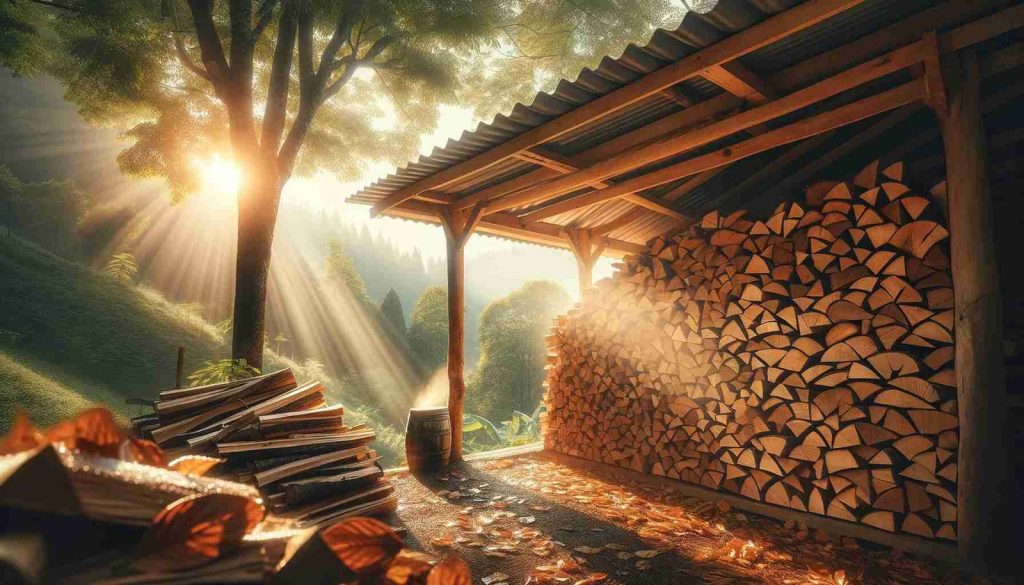
Split it, get it up off the dirt, stack it in single rows with the split faces exposed, and leave gaps between rows so wind can move through. Sun helps, but moving air does more work than sunshine does.
Pallets, 4×4 runners, or a couple of old fence rails all work as a base. Ground contact wicks moisture straight back into the bottom course and rots it, which is how people lose the bottom row of a stack every single year.
Orient rows so the prevailing wind hits the open side rather than the end. In most West Virginia hollows that means running the stack roughly perpendicular to the way the wind comes up the draw. A stack tucked tight against a north-facing wall dries slowly no matter how long you leave it.
Don’t build a huge cube of wood either. A pile four rows deep dries from the outside in, and the middle stays green. Long single rows beat compact piles every time.
Should you cover a firewood stack?
Cover the top, never the sides. A tarp wrapped all the way around a stack traps evaporating moisture against the wood and can leave it wetter in spring than it was in fall.
A sheet of metal roofing, a scrap of pole barn tin, or a tarp secured only across the top with the sides hanging open all do the job. You want rain and snow off the wood while vapor still has somewhere to go.
Some people leave stacks fully open through summer and only cover once fall rains set in. That works fine in a sunny spot. In our climate, where humidity sits high all summer and afternoon storms roll through most weeks, top cover year round is the safer habit.
Move about a week’s worth into a shed or onto the porch as burning season nears. Wood brought inside for a few days sheds surface moisture and lights easier, and you’re not digging splits out of a snow crust in January. Our guide to first frost dates around the state is a decent calendar for when to start hauling.
What happens if you burn wood that isn’t seasoned?
You lose heat, you make smoke, and you build creosote. Every pound of water in the wood has to be boiled off before the wood can burn, and that energy comes out of the fire instead of going into your house.
The physics is simple. Wet wood burns cooler, cooler smoke condenses on the way up a cold flue, and condensed smoke is creosote. Add a stove damped down low overnight and you can glaze a chimney in one season.
Wet wood is also the reason a lot of stoves smoke back into the room when you open the door. Low flue temperature means weak draft, and weak draft means smoke takes the easy path out the front. Dry wood fixes more stove problems than any gadget will.
None of this is exotic. It’s the same reason a brush pile that sat through a wet week won’t light, and if you’re planning that kind of burning, check the state’s brush burning rules and time windows before you strike a match.
When should you cut firewood in West Virginia?
Late winter through early spring is the ideal cutting window, roughly February into April. Sap is low, leaves are off so you can see what you’re doing, the ground is often firm, and the wood gets a full summer of heat and wind before you need it.
Wood you cut and split in March has a real chance of being ready by the following November if it’s ash, maple, or cherry. Oak cut in March is for the winter after next. That’s just how the species works, and planning two years ahead is normal for anyone burning oak regularly.
If it’s August and you’re reading this because the woodshed is empty, you’re behind on this winter’s wood but right on time for next year’s. Cut and split now, stack it in the open, and it will be in good shape by fall of 2027. For this season, look for standing dead timber or buy from someone who cut last spring.
August is a busy month for outdoor chores anyway. It’s the window for planning fall garlic beds, and the ridges start turning not long after, which our foliage timing breakdown tracks county by county. Getting wood split before the weather turns is the chore that pays off hardest.
Can you speed up seasoning?
Yes, within limits. Split smaller, stack in the sunniest and windiest spot you have, keep rows to one layer deep, and get the wood off the ground on good runners. Those four things together can cut months off drying time.
Splitting size matters more than people think. A split that’s four inches across dries far faster than a six-inch one because you’ve opened more surface and shortened the path water has to travel out.
What doesn’t work: covering the whole stack in plastic, stacking in a closed shed with no airflow, or leaving rounds whole and hoping. A closed garage is one of the worst places to season wood, because the humidity has nowhere to go.
Kiln-dried wood is the real shortcut if you need dry wood tomorrow. It’s expensive by the cord, but a bundle or two makes sense for a cabin weekend or a fireplace you light three times a winter. If you’re outfitting a place for cold weather, our wood stove season reading list and the deals hub are worth a look while you’re stacking.
Frequently asked questions
Can firewood season in six months?
Light woods like poplar, pine, and basswood can hit burnable moisture in about six months if they’re split small and stacked in sun and wind. Ash and cherry can sometimes get close in a hot dry summer. Oak, hickory, and locust will not, no matter how they’re stacked.
Does firewood season faster split or in rounds?
Split, by a wide margin. Bark and the outer layers of a round are built to hold moisture in, so an unsplit log dries mostly through its cut ends. Splitting exposes the inner grain and can cut drying time by half or more.
What moisture reading is safe to burn?
Under 20 percent measured on a freshly split inner face at room temperature. Between 15 and 18 percent is where most stoves run cleanest and hottest. Anything over 25 percent will smolder, waste heat, and load your flue with creosote.
Can firewood be too dry?
It can get dry enough to burn fast and hard, which shortens burn times and can overfire a stove if you load it full and open the air. Wood sitting under cover for five or six years also loses some density to rot and insects. In practice, most people’s problem is wet wood, not overly dry wood.
How do I know if wood I’m buying is really seasoned?
Ask when it was cut and split, then check it yourself. Look for cracked end grain, listen for a sharp knock instead of a thud, and split one piece to test with a meter if you have one. “Seasoned” on a roadside sign means nothing on its own.
The short version: split it, stack it single row off the ground, cover the top, and give it a summer. For oak, give it two. Wood you handle in the spring is wood you’ll be glad about in January.
If your shed is thin this August, do both jobs at once. Cut and stack for next winter now, and source this winter’s wood from somebody who split theirs a year ago. The stove doesn’t care about your intentions, only about what the moisture meter says.
